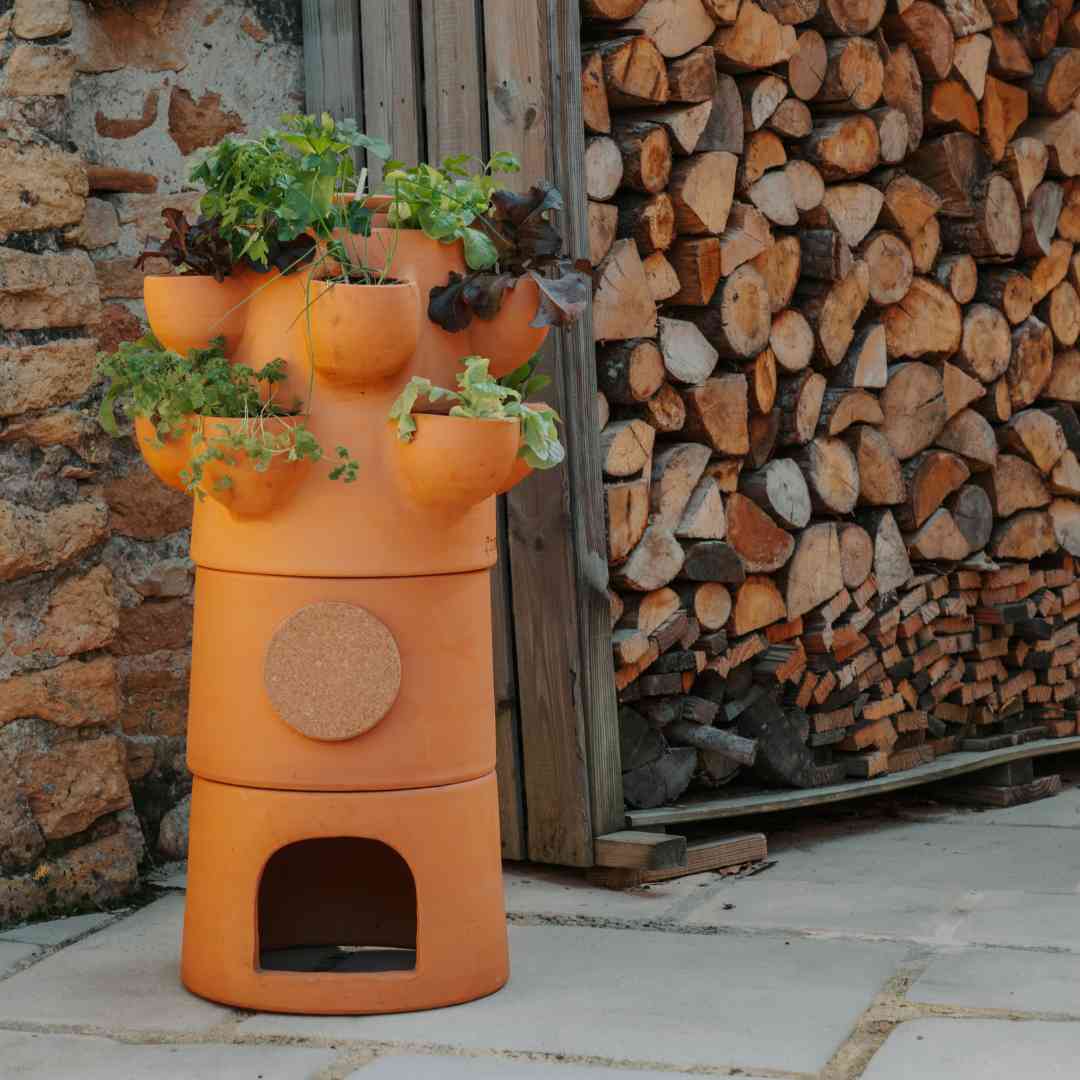
With the arrival of summer comes the desire to garden, whatever the space available: windowsill, balcony or terrace.
From the Latin "primus" for first and "tempus" for time, spring embodies nature's renewal. Warmer temperatures, longer daylight hours and much more light than in winter stimulate plant germination and growth.
Spring is THE season to indulge in the joys of gardening, with plenty of planting, sowing, germinating and harvesting to be done.
Contents
What to plant in spring
Garlic - shallot - onion
Now is the time - until the end of March - to plant garlic, onions and shallots, bulblets of which are available from garden centers. Even if onions can be grown from seed, opting for bulbils saves time on cultivation and means earlier harvests.
For garlic, you can buy organically grown garlic heads and pick the cloves around the edges. Larger than the inner cloves, they will be more productive.
The smaller cloves can be planted to harvest carnations within 3 months. Carnation is nothing other than garlic "en vert" harvested young, with edible stems and leaves. Its taste is delicate. Use the leaves to flavour salads, omelettes or fromage blanc sauces, replacing chives.
Place garlic cloves, onions and shallots in a sunny spot every 10 cm at a depth of 3 cm, leaving the tips flush with the soil.
Strawberry
Strawberries are traditionally planted in autumn, to allow the plants to root properly before winter. However, if you haven't had a chance to do so, spring offers a catch-up session.
For harvests staggered until the first frost, choose varieties :
- remontantes which produce fruit several times a year, from May to the first frosts, such as Mara des bois, Charlotte, Cirafine, Gento, Maestro ...
- non-remontant, which produce fruit only once a year, between spring and early summer, such as Gariguette, Maxim, Ciflorette, Cigaline, Madame Moutot ....
Plant your strawberry plants in a sunny spot in a substrate amended with compost, composted manure...
Mulch generously to preserve a certain humidity and reduce watering.
To avoid strawberry gray mold, a fungal disease caused by the botrytis cinerea fungus, grow alliums (garlic, onion, leek, etc.) in association.
What to sow in spring
First of all, sowing seeds can be a tricky process. So, if you don't have the time, inclination, or ability to do so, don't hesitate to buy seedlings. Ceercle seedling boxes have been specially designed to make your life easier.
How to sow successfully?
To give yourself the best chance of success, here are a few rules to follow:
- Use "new" potting soil for seedlings or a good-quality universal potting soil that can be used in organic farming and has been pre-sieved,
- Observe the sowing periods indicated on the seed packets,
- Sow at the right depth (2 to 3 times the size of the seed) in clean cups,
- Water gently over the top or by capillary action,
- Keep your seedlings indoors when recommended (e.g. warm seedlings) and provide sufficient heat,
- Position your pots near a light source as soon as they germinate,
- Transplant seedlings into individual cups at the 2-true-leaf stage (after cotyledons).
- Harden your seedlings gradually by taking them out every day for a few hours 2 to 3 weeks before transplanting them to their growing sites.

Eggplant - cape gooseberry - bell pepper - tomato - tomatillo
Start your seedlings indoors in March, close to a source of heat - or on a heat mat - for these vegetables. Native to hot climates, their seeds require relatively high heat ... from 18-20°C for tomatoes and tomatillos to 25°C for peppers, eggplants and cape gooseberries.
For windowsills, I recommend determinate-growth varieties that are suitable for growing in pots because they remain small in size, such as :
- Orange Hat, Red Robin, Maskotka for tomatoes,
- Bambino, Slim Jim, Pusa Purple Cluster for eggplants,
- Goldie for the physalis (or Cerise de Terre).
Grow these different crops in a sunny location.
Carrot - bean - pea
Sow peas and broad beans directly in the field, in rows or in bunches, after soaking the seeds for a few hours to soften the seed coat and speed up emergence. Sowing in cups followed by transplanting at the growing site is still possible.
For small spaces, opt for row pea varieties that can be grown on high stakes, with a small footprint (Weggiser, Carouby de Maussane, Heraut...).
Sow carrots directly in rows or broadcast. Keep your seedbed moist by laying down a piece of cardboard or a board. Water regularly and monitor seed emergence. Once they have emerged, usually 15 days to 3 weeks after sowing, remove the cardboard or board, as the seedlings need light.
The short carrot varieties - Marché de Paris, Bellot, Demi courte obtuse de Guérande, Chantenay à cœur rouge - are particularly well suited to growing in pots.
Grow these crops in sunny to slightly shaded locations for peas.
Swiss chard - watercress - spinach - spring and all-season lettuce - cabbage (broccoli, kale, head cabbage, bok choy, etc.) - Asian mustards - fennel - celery - chicory - rhubarb - arugula - mesclun, winter leek
Start your seedlings indoors or in a cold greenhouse or frame depending on your hardiness zone.
Transplant into individual cups at the 2 true leaf stage.
Plant these crops in sunny to slightly shady locations.
Beet - turnip - radish
Sow beet, turnip, radish directly in the ground.
As beet can be transplanted, it is still possible to sow in cups.
Grow these crops in sunny locations.
Cucumber - gherkin - zucchini - pumpkin (small-fruited)
These fast-growing vegetables should be sown in the 2nd half of April/early May, in a warm place, so that they can be transplanted just after the main Ice Saints (May 11-12 and 13). If you sow too early for your hardiness zone, the plants will stagnate in the cups and lack nutrients. They will also have a much harder time starting up again when transplanted to the balcony.
Grow these crops in sunny locations. Use an arch or build a structure with large bamboo plants to grow cucumbers, gherkins and pumpkins (Jack Be Little, Baby Boo varieties).
Aromatic plants
Agastache - dill - basil - chervil - chives - coriander - fennel - marjoram - oregano - parsley - rosemary - sage - lemon balm - hyssop.
Sow these aromatic and medicinal plants in situ (coriander, chervil, chives, parsley, dill, non-bulbous fennel, depending on your hardiness zone) or in pots indoors (agastache, basil, marjoram, oregano, rosemary, hyssop). Transplant into individual pots at the 2-true-leaf stage.
Grow in sunny to lightly shaded areas.
Flowers
They're essential for pollination, for the garden's resilience against pests and for its aesthetic appeal.
Sow cornflowers, borage, nasturtiums, cosmos, snapdragons, marigolds, carnations, California poppies, marigolds, Buenos Aires verbena, viperina, etc., as well as melliferous green manures such as phacelia from March onwards.
Sow sunflowers from the second half of April/early May onwards.
Place flowers close to your crops.

What to sprout?
Now is the time to start germinating certain crops to be planted from April-May onwards.
Potatoes
Buy potatoes from a garden center or organic food store that have not been treated for sprouting. Start sprouting as early as March, in egg boxes or crates stacked one on top of the other, in a bright, cool room (around 10°C - 15°C). Allow 4 to 6 weeks for stocky sprouts. Plant potatoes from April onwards, depending on your hardiness zone. Use lilac flowering as a phenological marker.
Grow potatoes in sunny to partly shaded areas.
Sweet potato
Sprout sweet potatoes - ideally also organically grown - by immersing the 3⁄4 in a glass of water. Position near a heat source (radiator, for example) and wait. Roots and then stems will form. You can take the stems to make cuttings in water. You can then transplant them into pots. You can also plant them directly in their cultivation spot without having to go through the transplanting stage after the Ice Saints, in a sunny position and in an amended substrate.

What can you harvest from your balcony garden?
If you garden all year round and planted crops in the second half of the previous year, here are the vegetables and herbs you can harvest in spring: aillet, beet, chard, carrot, chicory, cabbage (kale, Brussels sprouts, cauliflower...), spinach, lettuce, lamb's lettuce, Asian mustards, sorrel, parsnip, leek, black radish, coriander, chervil, chives, rosemary, thyme, sage, mint, fennel...
A beautiful season in the vegetable garden!
Valéry Tsimba