Create a stylish little space in "
"
Handcrafted in Portugal
Easy to use, indoors or outdoors
Odor-free,
nuisance-free
Unlike conventional composters, our worm composters are odorless and nuisance-free: perfect for indoor use.
4x faster
The action of the worms speeds up decomposition and stirs up the compost compared with a conventional composter.
Composter AND vegetable garden
Perfect for boosting your plants' growth and growing your herbs


Over 4,000 Ceercle
delivered to your door in 3 years!
⭐️⭐️⭐️⭐️⭐️ 5/5 | Over4,000 delighted customers


How does it work?
I GET EVERYTHING AT HOME 📦
Composter, potting soil, worms and even seedlings!
I RECYCLE MY BIOWASTE 🍏
Peelings, cardboard, egg cartons
I HARVEST COMPOST 🪱
To mix with my plants' potting soil
I RECOVER LIQUID FERTILIZER 💧
To water my plants naturally
I PLANT SUMMER AND WINTER 🌱
Organic seedlings thanks to my 4-season subscription
I COOK BEAUTIFUL DISHES 🧑🍳
Thanks to my harvests of herbs, edible flowers and vegetable plants

Easy to use
Suitable for
beginners of all ages!
Handcrafted
Our composters are made of terracotta,
by hand, in Portugal.
French innovation
A passionate and attentive team
in Lyon
compost at the source
Our composters
Compost indoors and outdoors in a space as small as 35 cm in diameter.
All our composters are modular—start small but think big!

Composter
to plant
4 Litres of compost
35 cm high
1 to 2 people
To be planted in a large pot
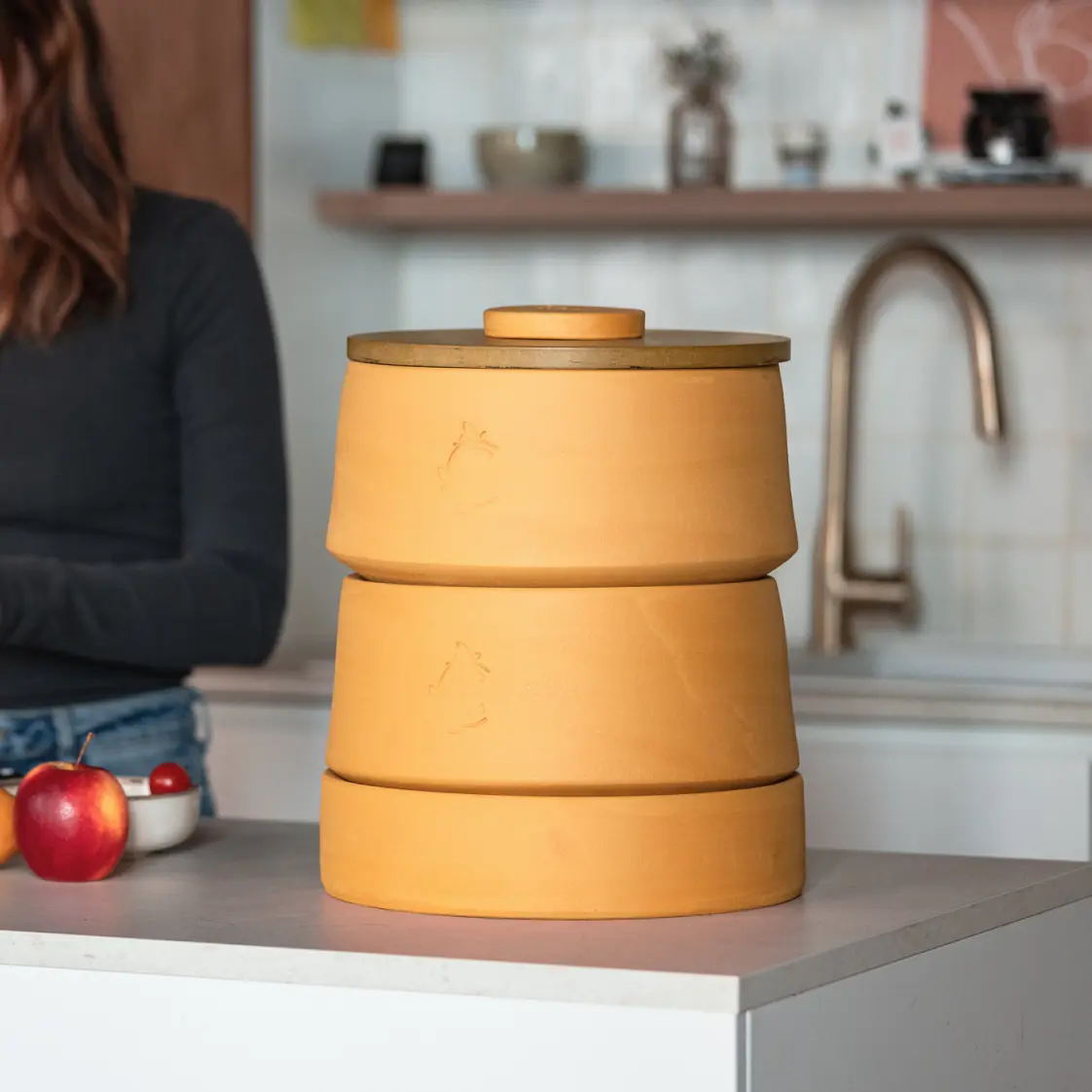
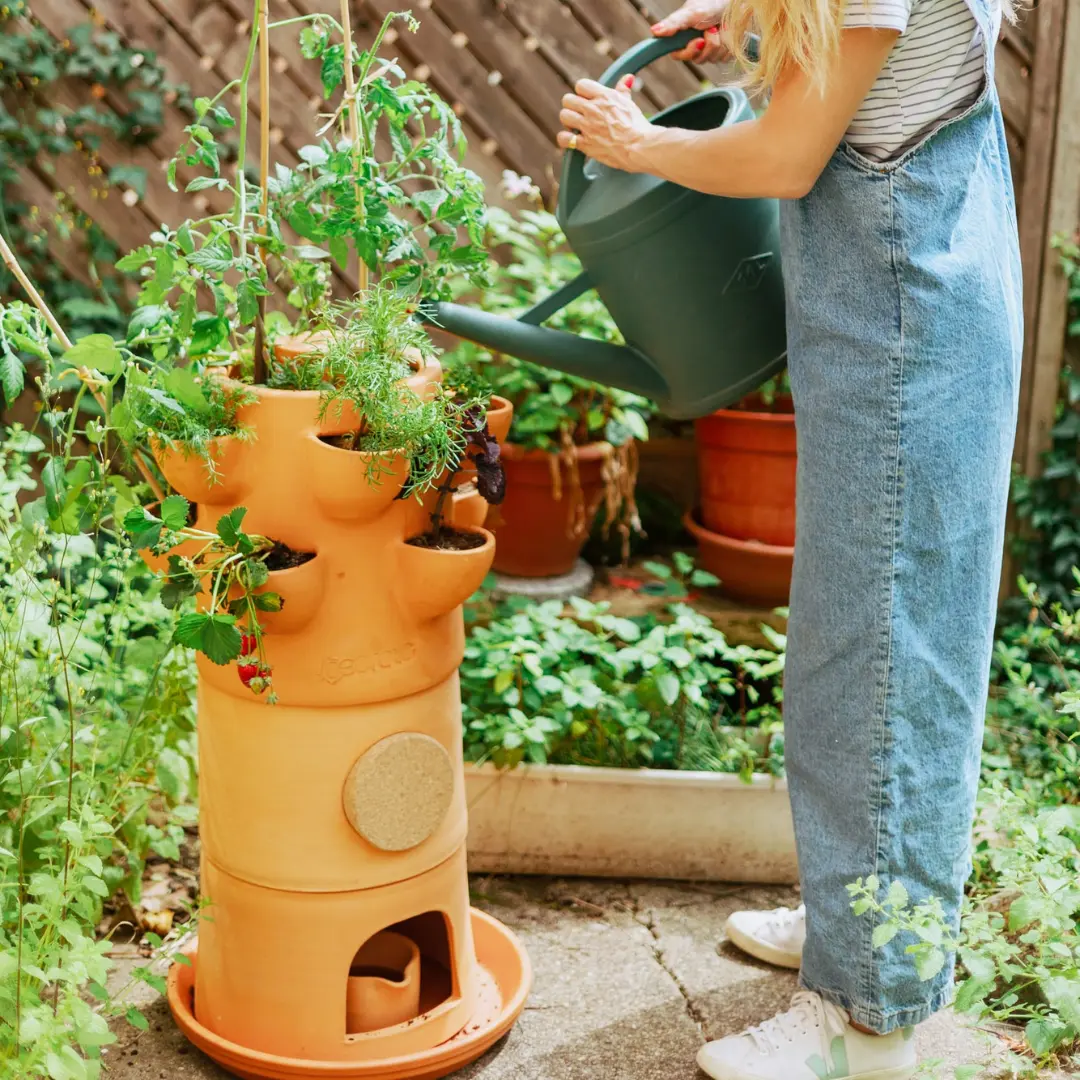
Compact worm composter
18 liters of compost
, 35 cm high
4 to 6 people
Perfect in the kitchen
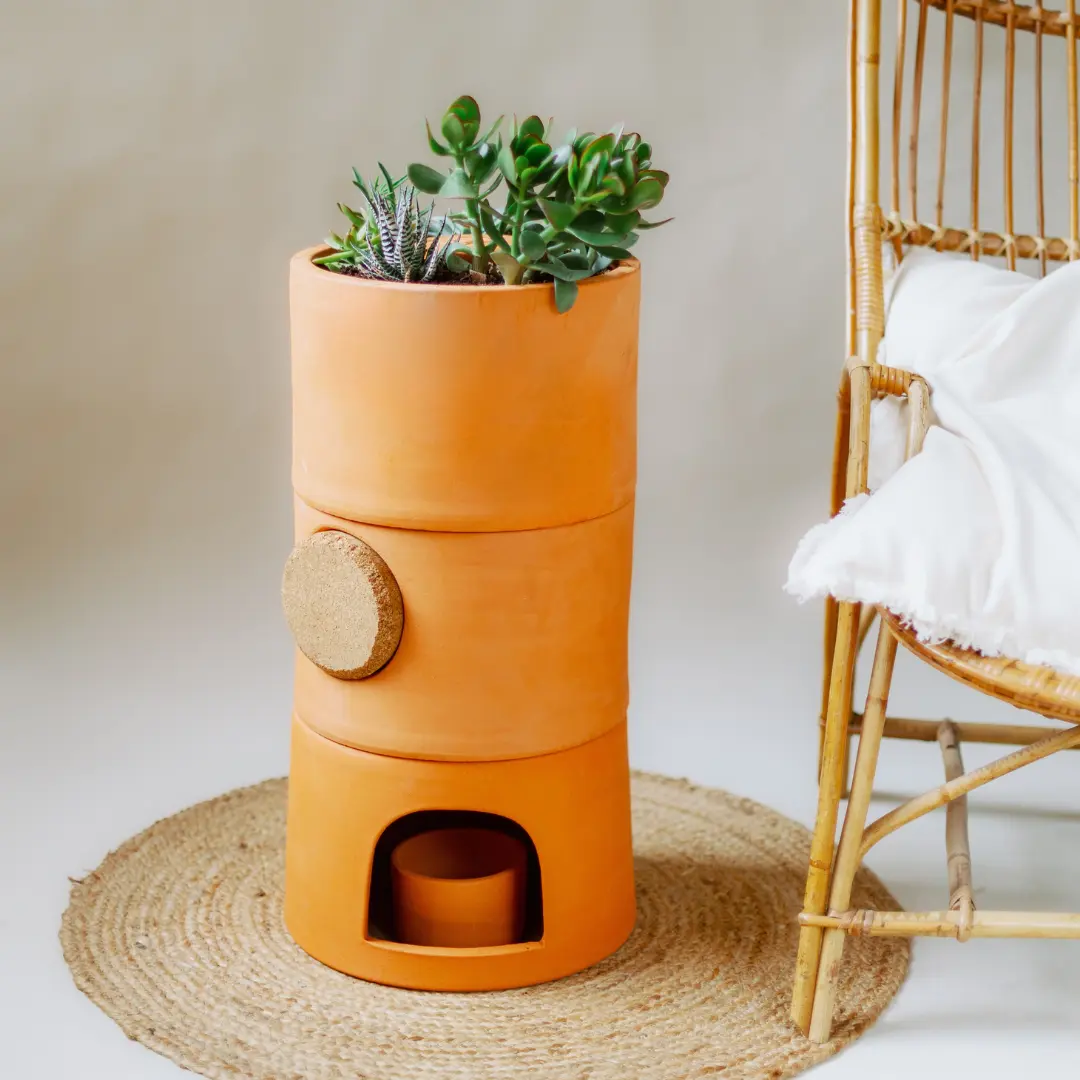
-composting flower pot
15 Litres of compost
60 cm high
2 to 3 people
Ideal for adding greenery to your living room
Register for upcoming private sales
Interested but want to give yourself time to think?
Receive our latest promotions by email!
the only home composters
in terracotta & modular design
Join the movement, create your own Ceercle
Shop nowWhy adopt a
apartment composter?

All about our apartment composters
We answer your questions
Compost worms (Eisenia Foetida) and other microorganisms break down organic waste and transform it into vermicompost. This compost is rich in nutrients that plant roots absorb for nourishment. That's why Ceercle a self-fertilizing vegetable garden: your peelings become fertilizer. In addition to fertilizing your soil, the vermicomposter provides constant moisture to plants and reduces the need for watering.
Our composters are designed to be installed both indoors and outdoors. Our apartment composters are guaranteed to be free of gnats and odors! If you want to grow herbs indoors, be sure to place your Ceercle a light source. Some of our customers even bring their apartment composters indoors for the winter.
In your vermicomposter you can put :
- Leftover fruit and vegetables, herbs, peelings, eggshells...
- Rolls of paper, egg cartons, newspapers...
- Coffee grounds, tea...
To find out more about vermicomposting, click here!

The fertilizer created by your worm composter will help you grow your plants! You will be able to collect both compost tea and fresh compost. Compost tea can be collected from the base of your Ceercle. Simply dilute it in water and use it on all your plants. You can also harvest the compost from your Ceercle and use it as a fertilizer-rich potting soil for your indoor and outdoor plants. With Ceercle apartment composters, your plants will benefit from soil that is naturally enriched by your organic waste!
Committed to ecology, the first Ceercle of terracotta, a 100% natural, healthy, mineral-based material... that's also attractive! A terracotta pot also helps regulate temperature. It protects the roots from both heat and cold, whatever the season. Their natural porosity also allows air and water to circulate, enabling the roots to breathe better. The weight of terracotta is also an advantage: although more difficult to move than plastic, the pots are also more stable, which is particularly important on a windy balcony.
A well-balanced vermicomposter is odorless. The action of the worms accelerates the decomposition of peelings and waste: as a result, they don't have time to decompose and give off unpleasant odours. In the event of a sulfurous odor, it's quite possible that the substrate isn't getting enough air, causing the organic waste to rot. It's all a question of balance! We recommend adding as much peelings as "dry" waste (such as cardboard, paper, etc.). To find out more about using dry materials in vermicomposting, click here..
Traditional composters and vermicomposters are very different!
The vermicomposter has the advantage of being odorless: the worms aerate the soil, eliminating decomposition odors
It's easy to use: self-maintaining, it adapts easily to all seasons, whereas the classic composter is slower in winter and smelly in summer. And there's no need to moisten or turn it- the worms do all the work!
Vermicompost is richer than conventional compost: the digestion of peelings by the worms makes it stable and easily assimilated by plants. Conventional compost requires a fermentation process, so its composition is less stable. Note: the compost in a conventional composter is 7 times less rich than that in a vermicomposter.
In a vermicomposter, avoid the following:
- Fish, meat, animal waste...
- Bread, pasta, fats
- Garlic, onions and citrus fruits!
- All non-paper packaging (food bricks, plastic...)
To keep things simple, here's the list of foods you can put in your vermicomposter.