After a festive meal or a seafood platter, oyster shells are often thrown away. However, they are a valuable natural resource!
Don't throw them away—discover our tips for recycling them! You'll reduce your waste while discovering simple, economical, and sustainable solutions for your home and garden.
So, how can oyster shells be recycled?
Contents
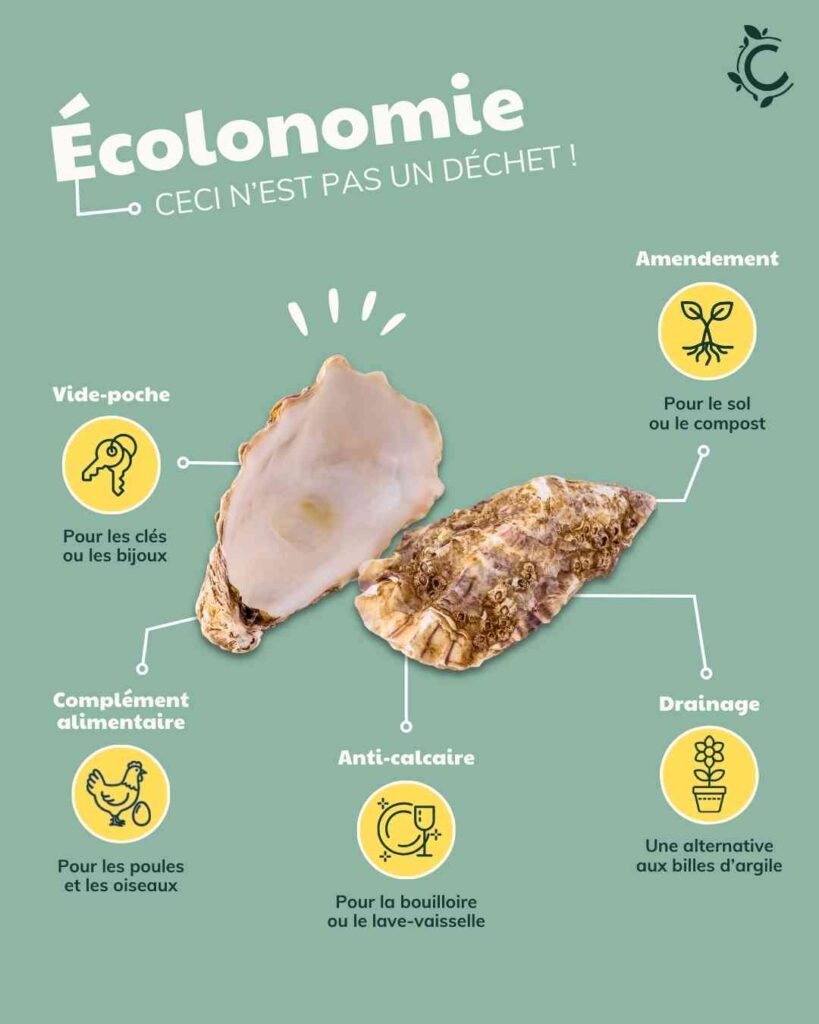
5 ways to recycle oyster shells
🪴 Natural drainage for plant pots
Oyster shells are an excellent alternative to clay pellets for draining flower pots.
Place medium-sized pieces of shells at the bottom of the pots:
- Water flows more easily,
- The roots are protected from stagnant moisture,
- The substrate remains aerated.
They can also be placed around plants to form a natural barrier against slugs and snails.
🐔 A dietary supplement for chickens and birds
Thanks to their high calcium and trace element content, oyster shells are a natural dietary supplement that is very beneficial for chickens and birds.
- Strengthens eggshells
- Strengthens bones
- Promotes more productive egg laying
👉 The shells must be ground very finely, then mixed with the grains or spread on the ground.
✨ A natural anti-limescale product for the home
Oyster shells have very effective descaling properties for cleaning your home. Instead of clogging surfaces, limescale sticks to them.
Where should they be placed?
- Kettle
- Dishwasher or washing machine
- Flush tank
💡 Remember to replace the shell when it turns white, which is a sign that it is saturated with limescale.
🌱 A valuable amendment for compost and the garden
Crushed oyster shells are a very useful limestone amendment for soil and compost.
- Provide minerals such as calcium and magnesium
- Improve the structure of soil or compost
- Increase water retention
- Promote plant growth and rooting
⚠️ They must always be crushed or ground into powder to break down properly.
👀 A decorative storage tray
Oyster shells can also be repurposed into elegant and original decorative objects. We love their pearly sheen.
Here are some DIY ideas for decorating your home:
- Storage compartment for keys or jewelry
- Soap dish
- Natural candle holder
- Table decorations
- Garlands
The shell can be left raw for a natural look or painted and decorated for a more artistic touch.
How can you easily crush oyster shells?
Since shells are very hard, they need to be prepared properly to make them easier to crush.
- Cleaning: rinse the shells thoroughly to remove any residue.
- Drying: allow to dry in the open air.
- Heating: place the shells in the oven (about 30 minutes) or in a fireplace to make them more brittle.
- Crushing: place the shells in a thick cloth and crush them with a hammer or mortar. Wear protective gloves to avoid injury.
Adjust the size of the grind according to the intended use:
- Coarse pieces: drainage, mulching, slug barrier
- Small fragments or powder: compost, soil amendment, dietary supplement for chickens and birds.
In conclusion: why recycle oyster shells?
Rich in essential minerals such as calcium and magnesium, oyster shells are good for animals, soil, and compost. Thanks to their descaling properties, they are an eco-friendly alternative to industrial household cleaning products. Finally, their pearly appearance means they can be turned into decorative objects!