Biowaste is not a recent invention. In fact, it already exists in law, as evidenced by this lengthy definition found in Article L. 541-1-1 of the French Environment Code (legal texts aren't very sexy, but I promise it's important for what comes next!
"Biowaste: non-hazardous biodegradable garden or park waste, food or kitchen waste from households, offices, restaurants, wholesale trade, canteens, caterers or retail stores, as well as comparable waste from food processing plants."
As this text makes clear, biowaste is everyone's business. In particular, foodservice professionals are among those whose activities require them to produce biowaste in industrial quantities. The good news is that laws already exist to govern the management of this bio-waste from the kitchens of your favorite restaurants. Didn't you know? We explain the measures already in place, and above all, how we could go even further without too much effort...
Contents
They're everywhere!
In canteens, restaurants, caterers and retailers... there's no point in denying it: biowaste is everywhere! While private individuals will be obliged to compost by December 31, 2023, this has already been the case since 2012 for professionals who produce bio-waste. At that time, only producers of more than 120 tonnes of biowaste per year were concerned, but the law provides for this threshold to be lowered to 5 tonnes per year on January1, 2023, and for composting to be made strictly compulsory from January1, 2024, as it is for private individuals.
Lots of numbers, lots of dates, but what does it all mean in concrete terms?
Regulations are in place to ensure that the large quantities of biowaste produced by the trade do not end up in landfill sites unsuitable for recycling. Indeed, if not composted, bio-waste piles up alongside ordinary garbage and either ferments or is incinerated, producing significant greenhouse gas and CO² emissions.
At Ceercle, we believe that this law and the one that will soon apply to individuals are obviously necessary, but they do not encourage us to go beyond what they recommend. Sorting organic waste is all well and good, but why not find a use for it directly in the kitchens of our favorite restaurants? It is interesting to view the law as a subject for discussion, with its positive and negative aspects, and to go beyond it by doing what we believe is even more appropriate.
Relocating bio-waste to the heart of restaurants
All too often, bio-waste is still regarded as ordinary garbage. It's true that large-scale producers of organic waste are already obliged to sort it, but in practice, this sorting action doesn't encourage catering professionals to introduce real changes in their practices. At the end of the day, bio-waste is thrown out of kitchens in the same way as other garbage.
So, chefs from near and far, why not give your peelings a second life yourself by producing your own compost and growing your own vegetables?
Obviously, the constraints of the foodservice sector make it complicated to fully internalize the recovery of bio-waste, given the sheer volume involved. What's more, not every restaurant has its own vegetable garden to cultivate, and it's impossible to hope that this will ever be the case (although wouldn't it be great?).
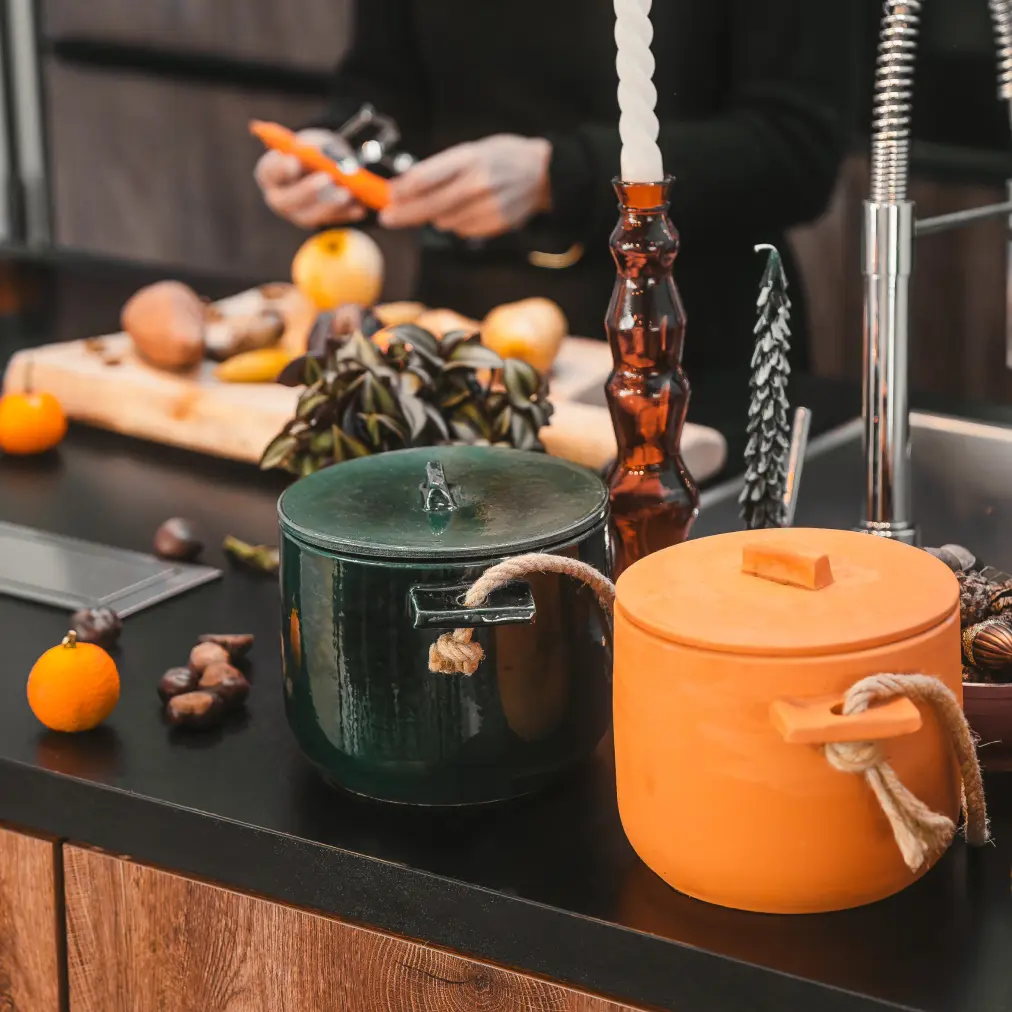
On the other hand, it is entirely possible to set up concrete, accessible initiatives in kitchens, such as kitchen composters, to relocate bio-waste directly in the restaurants and enable cooks to grow their own herbs or even a few vegetables. Without replacing the way restaurants currently operate, which buy their ingredients from a variety of suppliers, this would make it possible to recover a (small) part of their organic waste, and they would have the satisfaction of producing a (small) part of their ingredients... that's priceless!
Our contribution
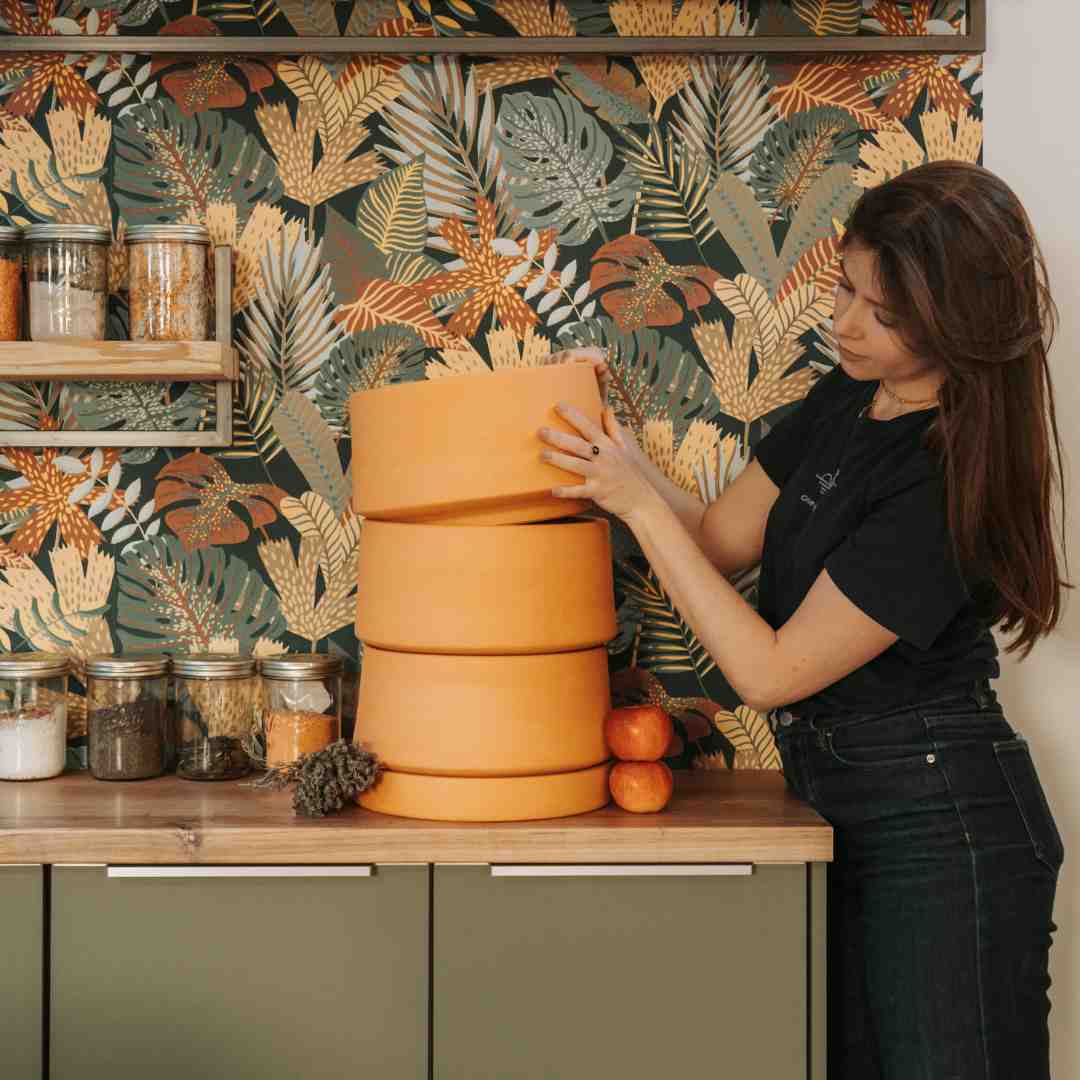
At Ceercle, we are convinced that composting gardens have a bright future ahead of them. As good for your health as they are for the planet, they already enable many individuals to compost and garden directly on their balcony or in their home.
But as we said at the start of this article, biowaste is everybody's business, and we wanted to prove to you that even catering professionals, who are major producers of organic waste, can choose to change their practices and take part in this great composting adventure. But because pictures are sometimes better than words, why not watch the chefs in action for yourself?
And yes, this year we have chosen to collaborate with Objectif Top Chef for season 8 of the hit show! From Monday to Friday at 6:40 p.m., you can see our Ceercle composting vegetable gardens Ceercle the M6 sets, right next to the contestants. Through this collaboration, we hope to give catering professionals some great ideas for managing their organic waste. We also hope to show the general public that gardening and composting are accessible to everyone, even without a garden or experience, and that it's never too late to change our habits.
So, friends and cooks, are you tempted by the adventure of gardening and composting?
Resources
If you are a foodservice professional, here are two resources to read and reread to help you in your transition towards the relocalization of your bio-waste:
- The Compost In Situ network, which supports professionals in their transition to reducing and reusing their bio-waste: https: //compostinsitu.fr/
- The GUIDE DE BONNES PRATIQUES concernant la gestion des biodéchets en restauration, produced in 2017 by the Agence de la Transition Ecologique et de la Maîtrise de l'Energie: https: //librairie.ademe.fr/dechets-economie-circulaire/1878-guide-de-bonnes-pratiques-concernant-la-gestion-des-biodechets-en-restauration.html