Have you ever thought of turning your organic waste into a resource for your plants or garden?
Composting is simple, accessible to everyone, and incredibly beneficial for reducing your waste while enriching your soil naturally.
We explain the ideal solutions for easy composting, whether you live in an apartment or a house. Follow our step-by-step guide to successful home composting!
Contents
Why compost?
Composting is much more than an ecological gesture. Here's why you should start today:
- Waste reduction: Turn your kitchen and garden waste into natural fertilizer.
- Create rich compost: Ideal for feeding your plants, flowers or vegetable garden.
- Zero waste approach: Take an active part in more responsible consumption.
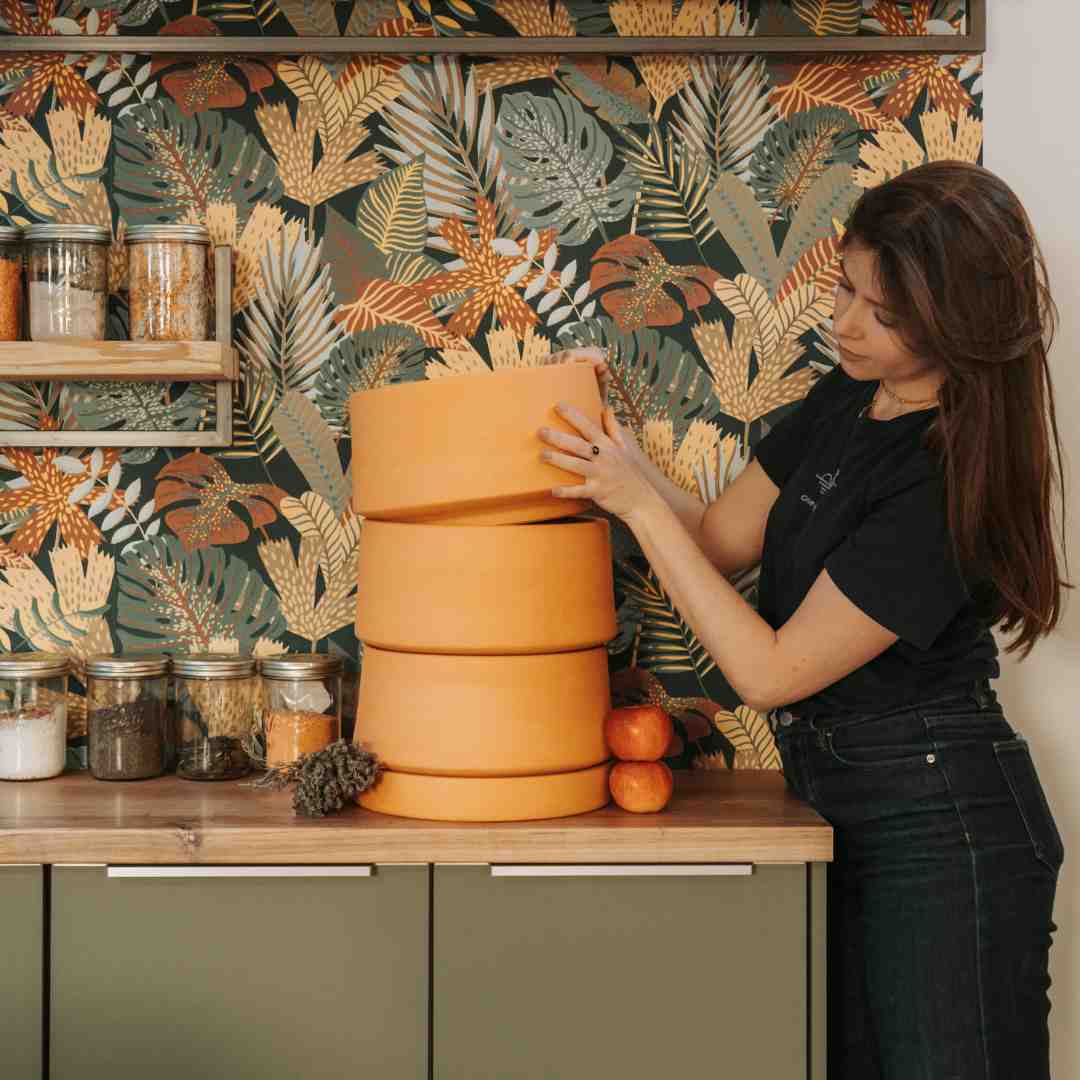
💡 You don't need a large garden: with our apartment composters, you can easily compost the waste of a 4-person household while adding a designer touch to your space, all in a small footprint.
How does composting work?
Composting is a natural process in which micro-organisms transform your organic waste into mature, fertile compost. For this process to take place, all you need to do is mix two types of waste in equal parts (50/50):
- Green waste (nitrogen): Fruit and vegetable peelings, fresh herbs, coffee grounds.
- Brown (carbon) waste: cardboard, unprinted paper, dead leaves, sawdust.
💡 The balance between these two categories is essential to ensure proper decomposition. At Ceercle, we use vermicomposting to speed up the decomposition process. Thanks to compost worms, the process is about four times faster. No need to moisten and turn the compost—the worms do all the work for you!
Which waste to compost?
To make a success of your compost, give priority to :
- Green waste: Peelings, fruit and vegetable scraps, wilted flowers, coffee grounds, crushed eggshells.
- Brown waste: dead leaves, corks, unprinted cardboard, paper towels.
👉 Find our complete guide to discover everything you can put in your worm compost bin and become a composting expert.

What waste should not be put into compost?
Certain elements should be avoided to avoid disrupting the composting process:
- Meat, fish, dairy products: Attract pests and slow down decomposition.
- Diseased plants: May contaminate compost.
- Citrus fruits in large quantities: their acidity can unbalance the process.
👉 Download our complete guide to discover everything you can't put in your worm compost bin and become a composting expert.
How do I make compost at home?
Here are the simple steps to get started:
- Choose a suitable composter: an indoor composter for an apartment or an outdoor composter for a garden.
- Add your waste: Alternate between layers of green and brown waste.
- Aerate regularly: Mix to encourage micro-organism activity.
- Monitor humidity: Your compost should be slightly damp, like a wrung-out sponge.
Do I need to water the compost?
If you add enough moist materials, your compost will regulate itself naturally, without the need for watering. Compost that's too dry slows down decomposition, while too much water can make it sticky. Ideally, your compost should have a moisture content comparable to that of a well wrung-out sponge.
What's the best compost activator?
Natural activators such as nettles, coffee grounds or comfrey leaves stimulate micro-organisms, speeding up decomposition and enriching your compost.
When to empty the composter?
Mature compost is ready when :
- Has a homogeneous texture.
- Is dark in color.
- Gives off a pleasant undergrowth scent.
💡 With Ceercle composters , you can easily collect your compost thanks to a system designed for simplified access. You also get a liquid fertilizer, called compost tea, which you can dilute directly in water to water all your plants.

Where to place the composter in the garden ?
To maximize the efficiency of your composter :
- Place in partial shade to avoid drying out too quickly.
- Place it on soil to allow soil micro-organisms to participate in the process.
- Position it near your vegetable garden or plants for convenient access.
Why choose a Ceercle composter Ceercle
If you don't have a garden, Ceercle an ideal and innovative solution for composting in your apartment or on your balcony:
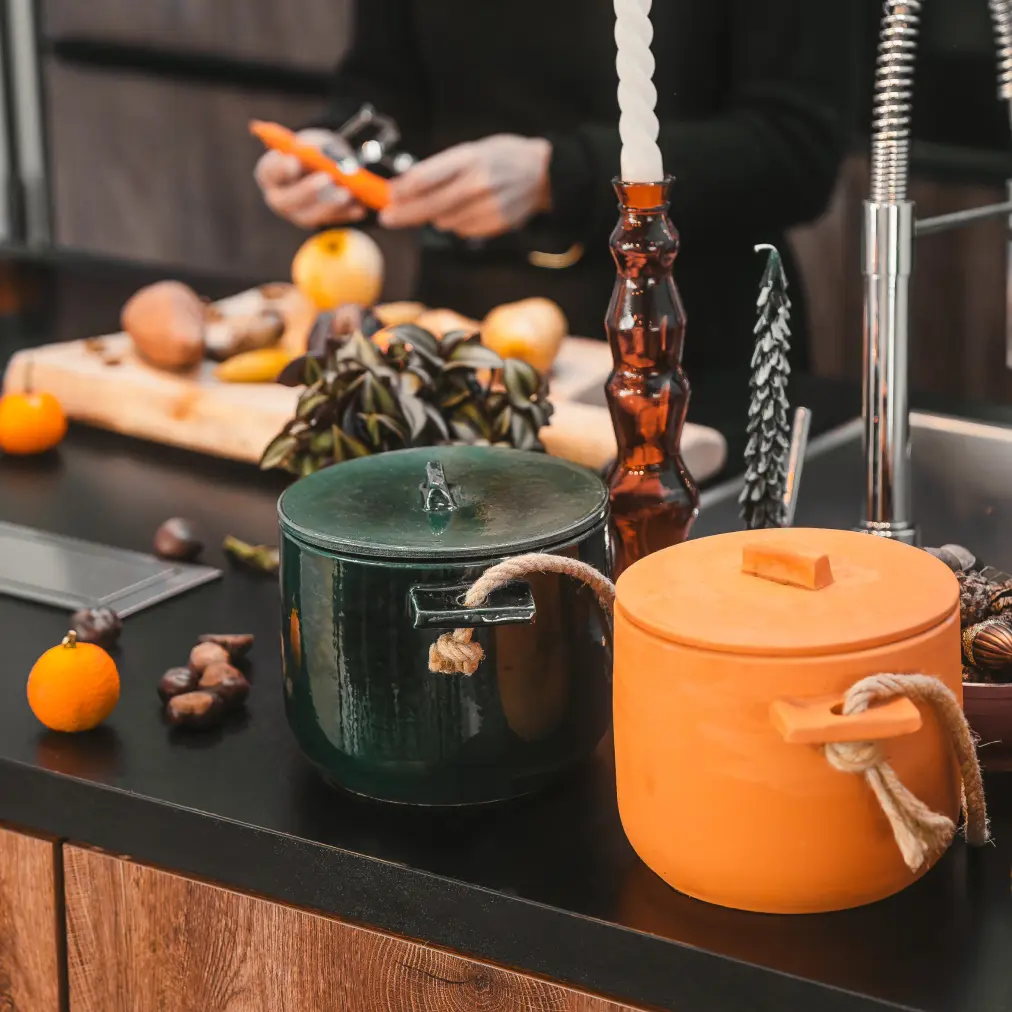
✨ Compact and attractive: Our worm composters blend harmoniously into your interior or exterior, while taking up minimal space.
🌱 Easy to use: Designed to be intuitive, they are accessible even to beginners in composting.
🪴 Compost and grow in the same place: Enjoy a 2-in-1 system to feed your plants and green up your space.
💧 No odors or pests: Thanks to a sealed design, you can compost without any unpleasant surprises.
🌍 A local eco-friendly approach: Made in Portugal, our composters promote responsible consumption.
👉 Discover our range of apartment composters.

Conclusion: With Ceercle, composting becomes child's play.
With Ceercle, composting becomes much more than just an eco-friendly gesture: it's a practical solution for reducing your waste, creating natural fertilizer for your plants, and beautifying your home. Our composters, designed to suit all spaces and levels of experience, make composting accessible and rewarding.
Get a Ceercle worm composter today Ceercle commit to a more eco-friendly lifestyle.
Every little bit helps, and your journey starts here! 🌱