What could be better than growing beautiful plants while nourishing your soil? That's the principle behind an underground composter: a self-sufficient garden!
It's not easy to always have your hands in the soil and tend to your vegetable garden, especially when it's on a balcony. An underground composter is the solution for urban gardeners who don't necessarily have access to the riches that the soil provides.
Are you passionate about gardening? Do you live in an apartment with window boxes? Are you looking for a solution that will allow you to always have beautiful soil, even though it's in a pot? An underground composter is the solution that will allow you to grow magnificent plants.
We'll tell you all about it in this article! Get ready, it's going to compost!
Contents
What is an underground composter?
The origin: the keyhole garden
The underground composter draws inspiration from an ancient permaculture principle: the keyhole garden. This concept was developed in Africa, mainly in Lesotho and Zimbabwe, to respond to extreme environmental and social constraints. In these arid and mountainous regions, the soil is poor, eroded, and rocky. Due to the lack of water and nutrients, traditional farming is difficult. The keyhole garden offers an ingenious alternative. It is a circular, raised vegetable garden with a basket in the center for organic waste. As the waste decomposes, it releases moisture and nutrients that are necessary for plant growth. This system ensures that the soil remains fertile while conserving water.
A concept brought up to date
This model inspired the modern concept of the underground composter. Unlike a traditional above-ground composter, the underground composter is a composting device built directly into the ground. It can be planted in open ground or in containers. Organic waste nourishes the soil and supports plant growth.
This approach creates a virtuous circle inspired by nature: biowaste becomes a resource for growing plants.
What is the purpose of buried compost?
The underground composter is particularly well suited to urban gardens, where space and resources are limited.
This is a real advantage for growing plants in pots. Over time, the soil in pots becomes depleted, compacted, and gradually loses its vitality. As a result, plants do not have the nutrients they need to grow and eventually die. And you thought you didn't have green fingers!
The underground composter allows:
- to recycle its organic waste directly on site;
- to maintain continuous biological activity in the soil.
- naturally enrich the soil and provide plants with fertile ground;
- to preserve the moisture of the substrate and thus reduce watering.
What type of underground composter should you choose?
Now, you may be wondering what an underground composter looks like. Well, there are several types available.
- Plantable composter;
- Compost bin from Ceercle
- Keyhole garden;
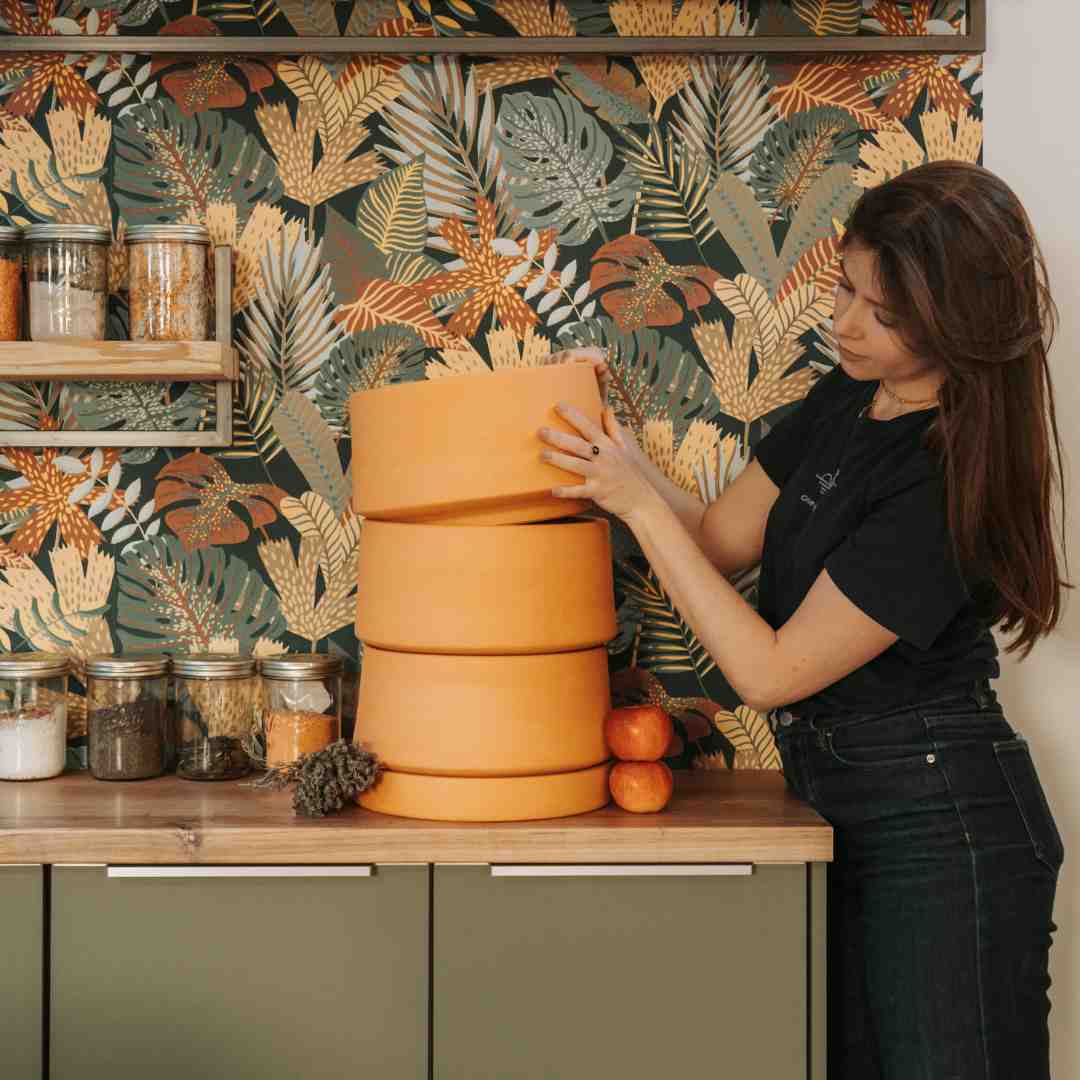
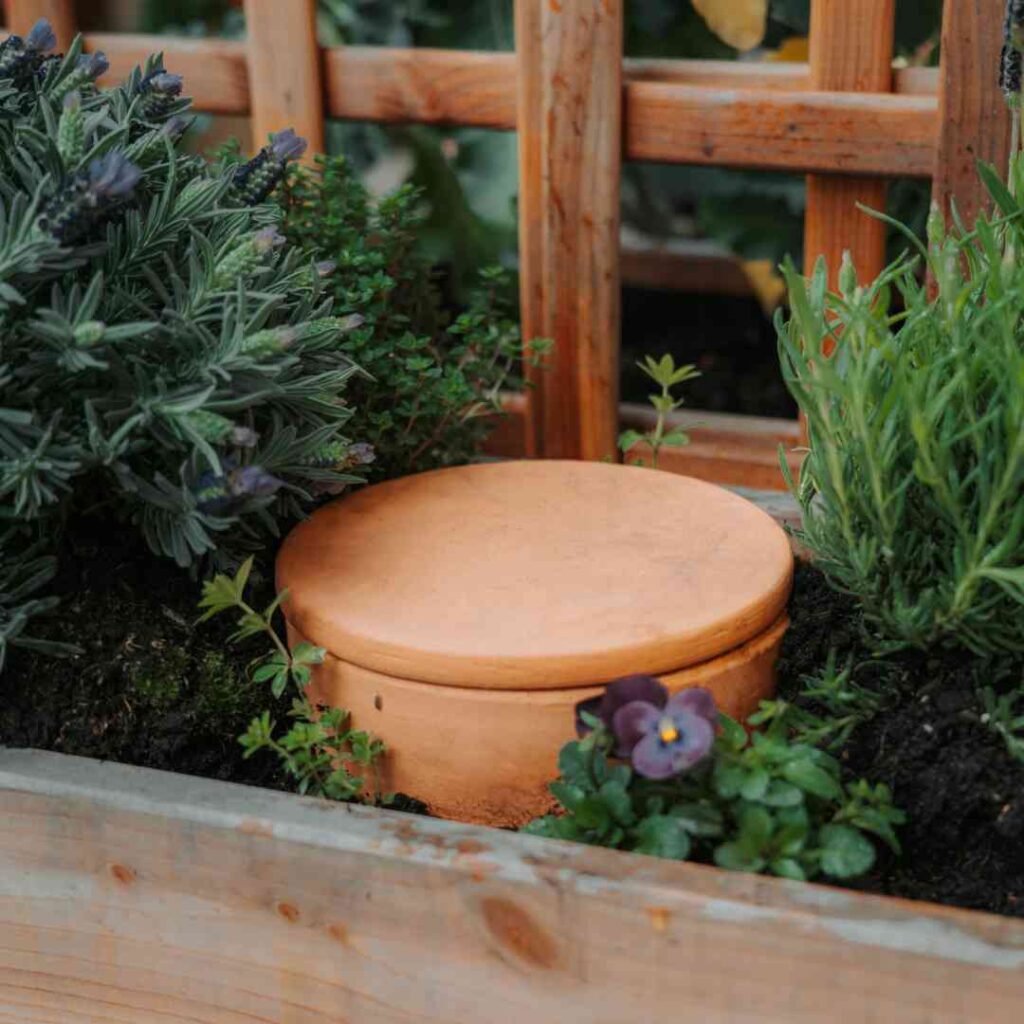
Underground composters are very effective, especially for pots and planters. They usually take the form of a terracotta column. They are easy to use: you plant the column in the ground and put your waste in it. As it decomposes, the waste nourishes your soil and plants. Underground composters generally cost less than €100.
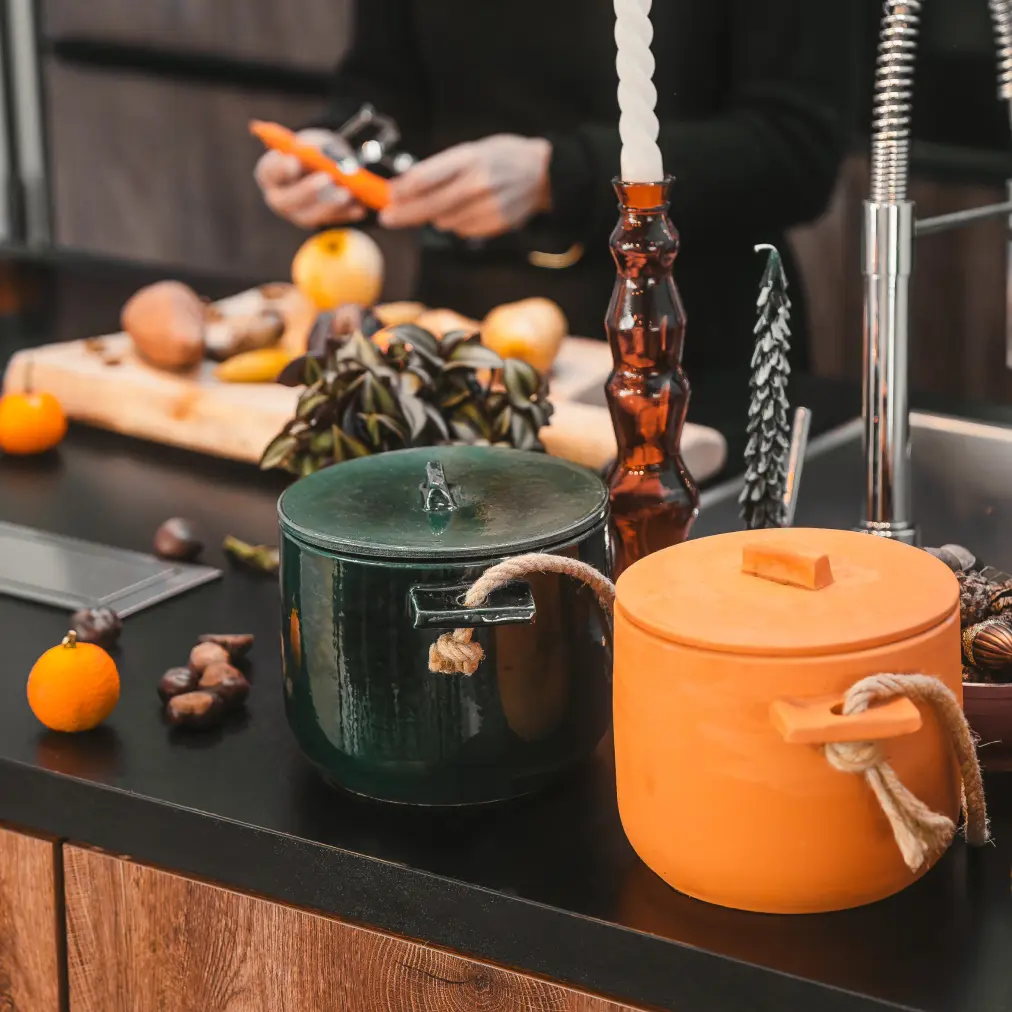
Ceercle composting vegetable garden Ceercle by the Keyhole garden. Its ingenious system combines a growing area with a built-in composter. As it is a vermicomposter, waste decomposes four times faster than in a traditional composter thanks to the compost worms. It is the ideal solution for gardening in the city or on a balcony! Find our composting vegetable garden on our website starting at $379.
As you can see, there are plenty of ways to garden, even in the city, and keep your soil fertile. It all depends on your needs and your budget.
How to use an underground composter?
What should you put in an underground composter?
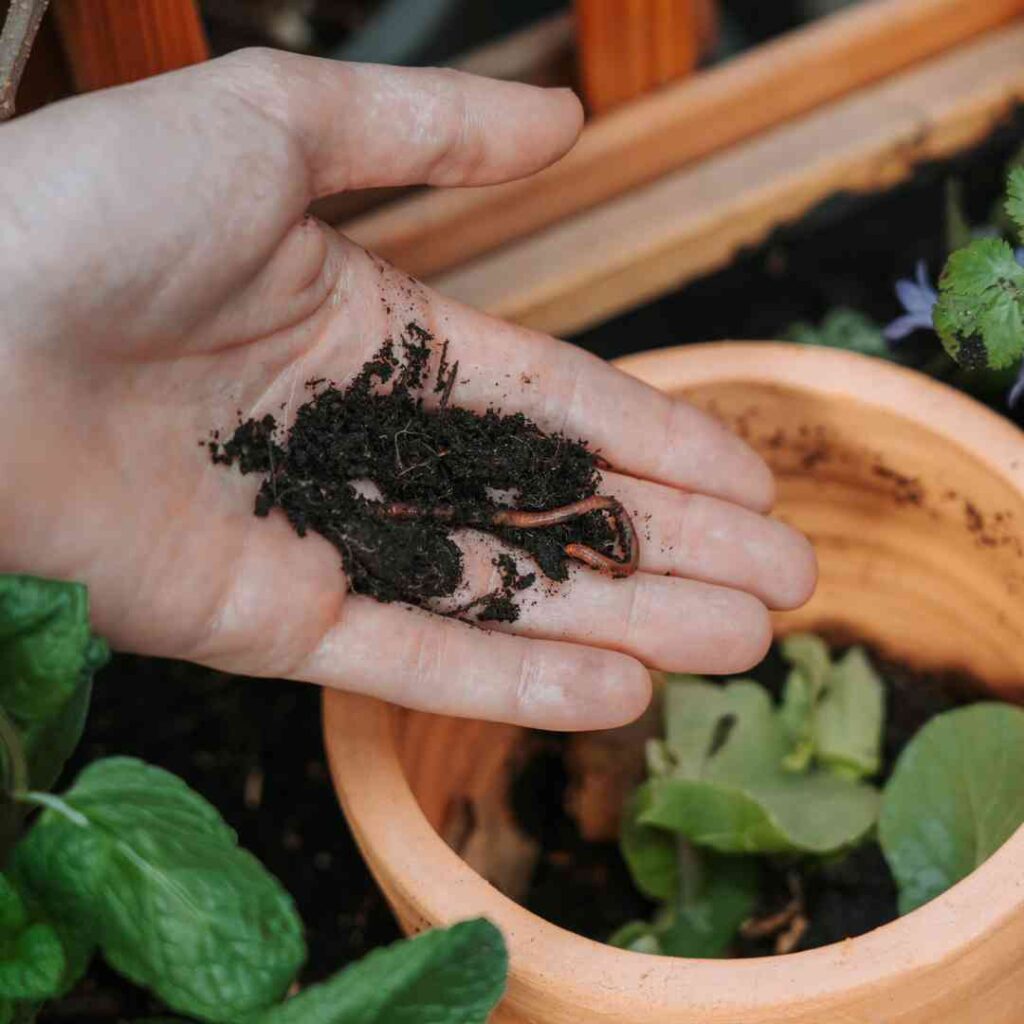
Compost refers to all decomposing organic matter. This waste is transformed by a multitude of soil "workers," often invisible to the naked eye: bacteria, earthworms, fungi, and other microorganisms. Thanks to their action, waste is transformed into essential nutrients that enrich the soil in a sustainable way.
Biowaste accounts for 30% of your trash. Add it to your underground composter to regenerate your soil.
- Wet waste: peelings, fruit and vegetable scraps, coffee grounds, etc.
- Dry waste: paper, cardboard, dead leaves, etc.
You can add compost worms to your underground composter. They will quickly and efficiently break down the material you put in!
How to balance compost?
For healthy compost, it is important to maintain a good balance between brown matter, which is carbon, and green matter, which is nitrogen. Adding brown matter requires adding green matter, and vice versa.
Brown material (cardboard, dried leaves, small pieces of toilet paper rolls, etc.) has several properties:
- Absorb moisture;
- Limit odors;
- Ensure good ventilation.
When your compost is balanced, it does not give off unpleasant odors. This is because when the carbon/nitrogen ratio is unbalanced, microorganisms can undergo intense fermentation and cause odors.
Mistakes to avoid when composting
We advise you to avoid several mistakes:
- Putting in too much waste at once;
- Forgetting to put cardboard;
- Discard large, uncut pieces;
- Allow the compost to dry;
- Move your column constantly if you adopt this practice.
Conclusion
The underground composter is an ingenious and necessary solution to the constraints of growing crops in limited spaces, particularly in cities.
It transforms a limited growing space, often prone to rapid substrate depletion, into a self-sufficient and regenerative ecosystem. By integrating a composting or vermicomposting system, it creates a closed nutrient loop: organic waste is directly converted into natural fertilizer.
This process not only nourishes plants, but also actively restores the vitality of the soil and ensures its fertility. All this is done in an odorless manner if the carbon/nitrogen ratio is correctly maintained.
Whether it's compost bins for planting or more elaborate systems such as the Keyhole Garden or Ceercle composting vegetable garden, this method offers a practical and environmentally friendly solution for growing high-quality crops!