Sweet and comforting, chestnuts are one of the great pleasures of autumn. Whether roasted, in a soup, or incorporated into sweet and savory dishes, they always delight our palates. Rich in fiber, protein, and minerals, they combine delicious flavor with health benefits.
But their bugs, bristling with spines, are also worth paying attention to. They can be reused at home and in the garden for economical and eco-friendly tips.
So, how can chestnut shells be recycled?
Odorless composting indoors or outdoors
From €39.00
Easy & Odorless
Handcrafted products
Compact
Modular
Eligible for subsidies
Contents
5 ways to recycle chestnut shells
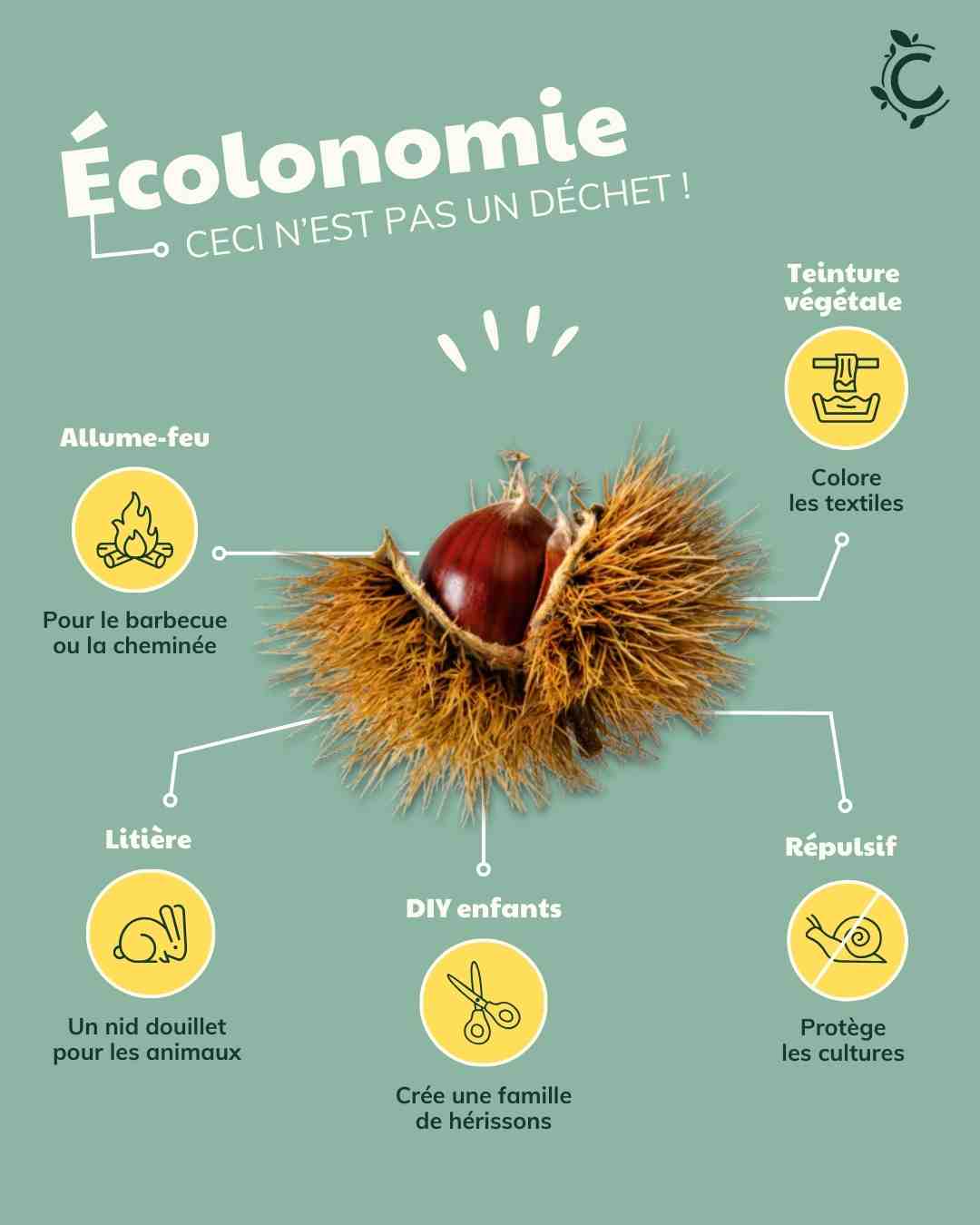
Chestnut shells are not waste: they can be reused in practical and economical ways! 💚
👕 A plant-based dye
Want to give chestnut shells a second life? Great idea! These prickly shells hide a real treasure trove of tannins that are perfect for vegetable dyeing.
Ingredients:
- 12 liters of water
- 700 g chestnut shells
- 400 g of fabric (cotton-linen blend recommended)
Preparation:
- Boil the water, then soak the bugs for 20 minutes.
- Then leave the shells to soak in water overnight.
- Strain the mixture and add the shells to the compost.
- Boil the filtered juice, then immerse the fabrics. Cook over low heat for 1 hour.
- Rinse the fabrics in cold water to set the color.
The result is a soft, natural brown! An eco-friendly, artisanal way to dye your fabrics using your waste.
🐰 Pet litter
Did you know that chestnut shells can make a super cozy bed for your little companions such as hamsters or rabbits?
Yes, no more industrial litter, make way for natural and biodegradable products! Just crush these shells and pop them into your rodent's cage.
Simple, eco-friendly, and what's more, your little friends will love it! 🐇
🔥 An eco-friendly fire starter
Chestnut shells are a great alternative to chemical firelighters. You can use them to start a fire in your fireplace or barbecue.
Before using chestnut shells as firelighters, remember to make a small incision in them: this helps them burn better!
Also, make sure they are completely dry—there's nothing worse than a damp firelighter.
Ceercle tip Ceercle Dry the chestnuts for 3-4 days in the sun or 3 hours in the oven at 60°C.
For a great fire, mix them with wood chips or pine cones: the winning combination for blazing flames!
🦔 A DIY project for your children: a family of hedgehogs
A hedgehog made from chestnut shells—here's a wonderful activity to share with your children!
For this very simple DIY project, you will need:
- chestnut husks
- cardstock
- thread
- scissors
- pompom (optional)
- glue
- a felt-tip pen
Ceercle tip Ceercle Wear gloves to handle bugs without getting stung.
To create your family of hedgehogs:
- Cut a triangle out of your cardstock.
- Roll it up to form a cone shape.
- Secure the shape with glue.
- On the open side of the cone, make a hole on the right and one on the left using the scissors to thread your string through.
- Take the chestnut husk, thread the string through the first hole, then the second, and finally around the husk to tie the cone and the husk together! Tie a knot.
- Use the pen to draw a little face and add a pompom for a nose!
Here's a super cute and super eco-friendly decoration!
🐌 A natural repellent against pests
A spicy tip to protect your garden!
Chestnut shells act as a barrier against pests in your garden. Their spines repel slugs and snails, keeping them away from what appears to be the most beautiful salad of the summer.
How does it work? Take three or four chestnut shells and place them around the base of your plant. They should be in direct contact with the soil. This is a good technique for eliminating intruders from your garden while preserving biodiversity.
Ceercle tip Ceercle To improve their effectiveness, remember to replace them regularly, especially after heavy rain, which may have softened them!
♻️ Chestnut shells: compost or no compost?
Good news: yes, chestnut shells can be composted!
But as always with composting, it's all about balance and common sense.
Chestnut shells are rich in tannins, which means they take a long time to decompose. They are not toxic to compost, but they need to be incorporated wisely.
Here's what you need to do:
- Crush them roughly with a pestle or a rock—it's quick!
- Mix well with your kitchen waste.
- And above all, don't use too much at once. Just a handful from time to time.
Chestnut shells are not recommended for use in a worm composter. They are too hard, too dry, and too rich in tannins, which means that worms do not like them and they may disrupt their delicate balance!
👉 Want to give your waste a second life? Discover our range of apartment composters, compact, attractive and 100% adapted to city life.
Cultivate and compost in the city (indoors or outdoors)
Easy & Odorless
Handcrafted products
Design
Compact
Modular
Eligible for subsidies