Transplanting your small tomato seedlings is an essential step in growing robust, productive plants throughout the year. Without this step, the plants may not grow in good conditions.
We have prepared a guide for you to learn everything you need to know about this key step!
Contents
What does transplanting involve?
Transplanting is when your tomato seedlings have reached a satisfactory size to be moved to a larger pot. This step achieves several things:
- The plants will grow their root systems;
- The plants will grow taller;
- The plants will grow stronger.
This process simply allows your plants to benefit from more light, more space, and more nutrients. As a result, you will get tasty, sweet fruit!
When should tomato plants be transplanted?
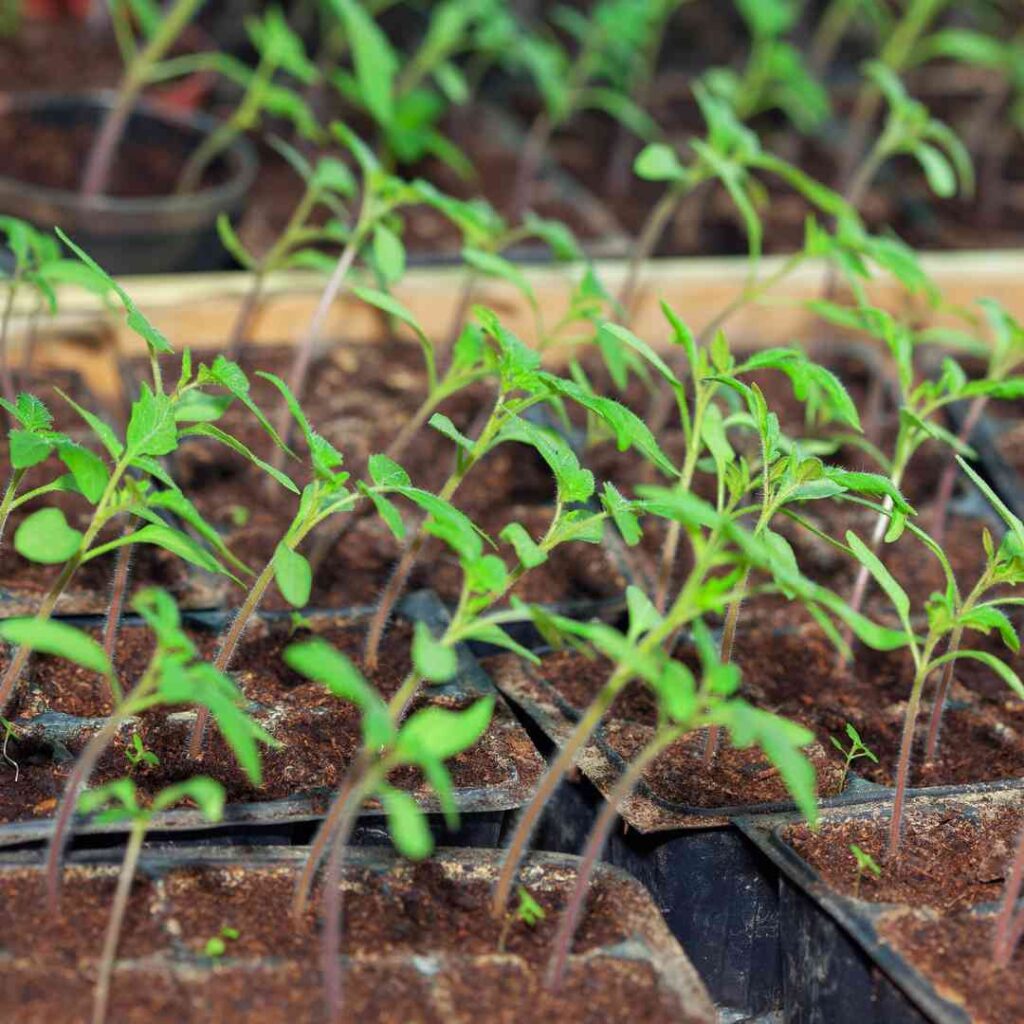
It is generally recommended to start sowing seeds from the end of January until March. Transplanting is therefore done after three to four weeks, when the plants have produced between two and four leaves.
Please note, it is advisable not to wait too long so that your plants do not stagnate.
With our 4 seasons subscription receive boxes of organic and seasonal plants
4 boxes of 6 or 16 plants per year
Careful delivery
After-sales service
4 gardening masterclasses
Aromatics, vegetables, flowers
No obligation
Tutorial: How to transplant tomato seedlings?
To transplant your tomato seedlings, you will need:
- Plant pots or containers;
- Lightweight potting soil specially formulated for seedlings;
- A teaspoon;
- A water sprayer.
Step 1: Prepare the pots
First, fill your pots with soil and tamp it down to prepare a loose, firm "soil" for your small plants. Moisten the soil thoroughly with a water sprayer.
⚠️ Essential: ensure your pots have holes in the bottom to allow water to drain.
Step 2: Transplant the seedlings
Using your finger or a pen, dig a hole 2 cm deep in your pots. It is really important that your plant is planted deep enough so that it can take root. Then, carefully remove your first seedling and replant it in the pot using the small spoon.
Step 3: Water
Finally, spray water onto the soil in your pots. The water needs to penetrate deeply so that your plants don't lack moisture.
Where should you place your tomato seedlings?
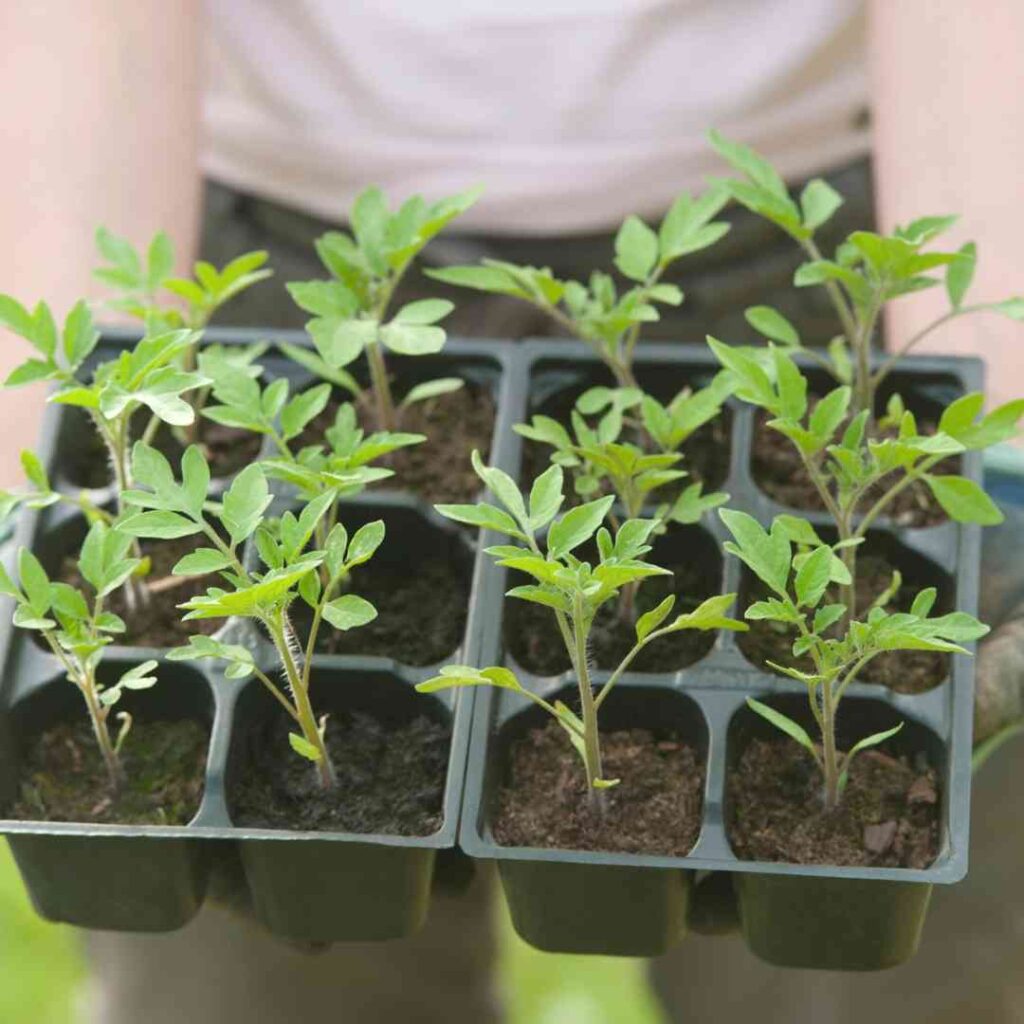
If you have a greenhouse or conservatory, you are very lucky! Light will penetrate all around the plant, allowing it to grow straight and tall.
Alternatively, you can place them in a bright room, making sure to turn the pots every two days so that the stem grows straight and does not lean only toward the light source.
It is essential that your plants are kept in an environment with a temperature of 17 to 25°C. Avoid placing them in direct sunlight and remember to water them regularly, especially if it is hot.
Plants are like children; they need special attention to grow in the best conditions.
What to do after transplanting?
Once your plants have reached the desired size, grab your trowels! You can finally transplant them into the ground and start harvesting your first tomatoes in a month or two, depending on weather conditions.
A self-fertilizing vegetable garden for growing and composting in a small space
Easy & Odorless
Handcrafted in Portugal
Design
Compact
Modular
2x more harvests than in pots
Frequently asked questions about tomatoes
🍅 How long should tomatoes be kept in pots after transplanting?
Tomato plants remain in pots for 3 to 5 weeks, until they are developed enough to be planted in the ground or in their final pots.
🍅 Can tomato seedlings be transplanted directly into the ground?
No, except under exceptional circumstances. Transplanting is first done in pots. Planting in the ground is done after the last frosts, once the plants have hardened off.
🍅 What happens if I don't transplant my seedlings?
If you do not transplant your seedlings, the plants may overlap, lack soil, and fail to grow.
You know everything there is to know about transplanting tomatoes!