Winter is coming, bringing with it falling temperatures, longer nights, and a slower pace that naturally takes hold in the garden. However, beneath the surface of the soil, life never stops: the soil continues to breathe, microorganisms are still at work, and earthworms are quietly adapting to get through the cold season.
For gardeners and composters alike, winter is a key time of year. It is a period when we protect, prepare, and support nature so that it can burst back into life in spring. Understanding what happens during these quieter months allows us to take intelligent action.
Because even though everything seems dormant, winter is an essential stage in the cycle of nature. It is an opportunity to strengthen the soil, help living organisms survive the cold season, and implement best practices for an optimal restart as soon as the first rays of sunshine appear.
Here we explain everything you need to know to take optimal care of your compost worms during the winter months!
Odorless composting indoors or outdoors
From €39.00
Easy & Odorless
Handcrafted products
Compact
Modular
Eligible for subsidies
Contents
How does winter affect your worms?
How do worms react to cold temperatures?
Like all living creatures, earthworms are sensitive to temperature changes, which inevitably affect their metabolism. Rest assured, your earthworms will not die at the first drop in temperature.
Nevertheless, it is important for you to know the impact of temperatures on your earthworms:
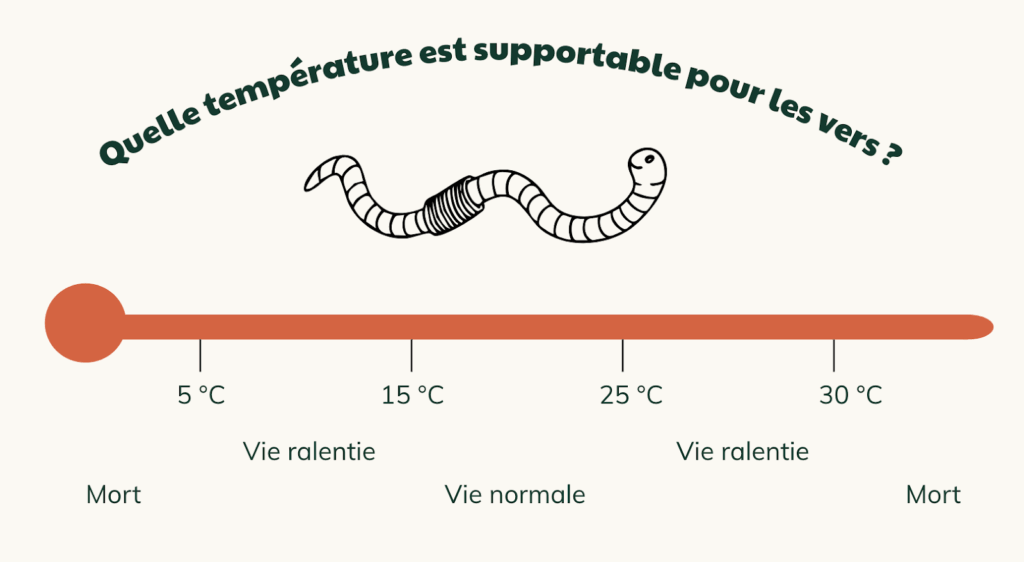
- Earthworms are most active between 15 and 25 °C;
- Below 15°C, their activity decreases slightly;
- Below 5°C, they go into survival mode;
- At temperatures below 32°F (0°C), they can die if they are not protected.
They don't die because it's cold, but because the frost penetrates the organic matter. The danger therefore comes mainly from a compost bin that is very damp and exposed to the wind.
How do worms adapt?
To adapt to falling temperatures, earthworms adopt different behaviors. There are different types of earthworms on the planet; some enter a state of quiescence, a lethargy triggered by cold or frost, while others practice diapause, a genetically programmed rest that allows them to conserve energy even when external conditions remain favorable. As for our vermicomposting worms, they are much more vulnerable and are therefore much more affected.
In a worm composter, worms protect themselves in several ways:
- Descending into the warm areas of the tank;
- By huddling together to stay warm,
- By slowing down their metabolism to conserve energy,
- By taking refuge in litter or carbonaceous material.
Their instinct is powerful: it's up to you to provide them with a stable environment to facilitate this adaptation.
How to prepare your worm composter for the arrival of cold weather?
Adapting worm feeding
The first drops in temperature greatly impact the digestion of worms and, as a result, the quantities ingested and digested are much lower.
Therefore, it is advisable to reduce food intake gradually so as not to overload your vermicomposter. In addition, it is also advisable to avoid sudden large intakes and to favor finely chopped food.
Finally, to prevent cold air from entering your worm composter, avoid foods that are too rich in water, as they could cool down their home. The goal here is not to create excess moisture that is difficult to manage in winter.
Add carbonaceous material
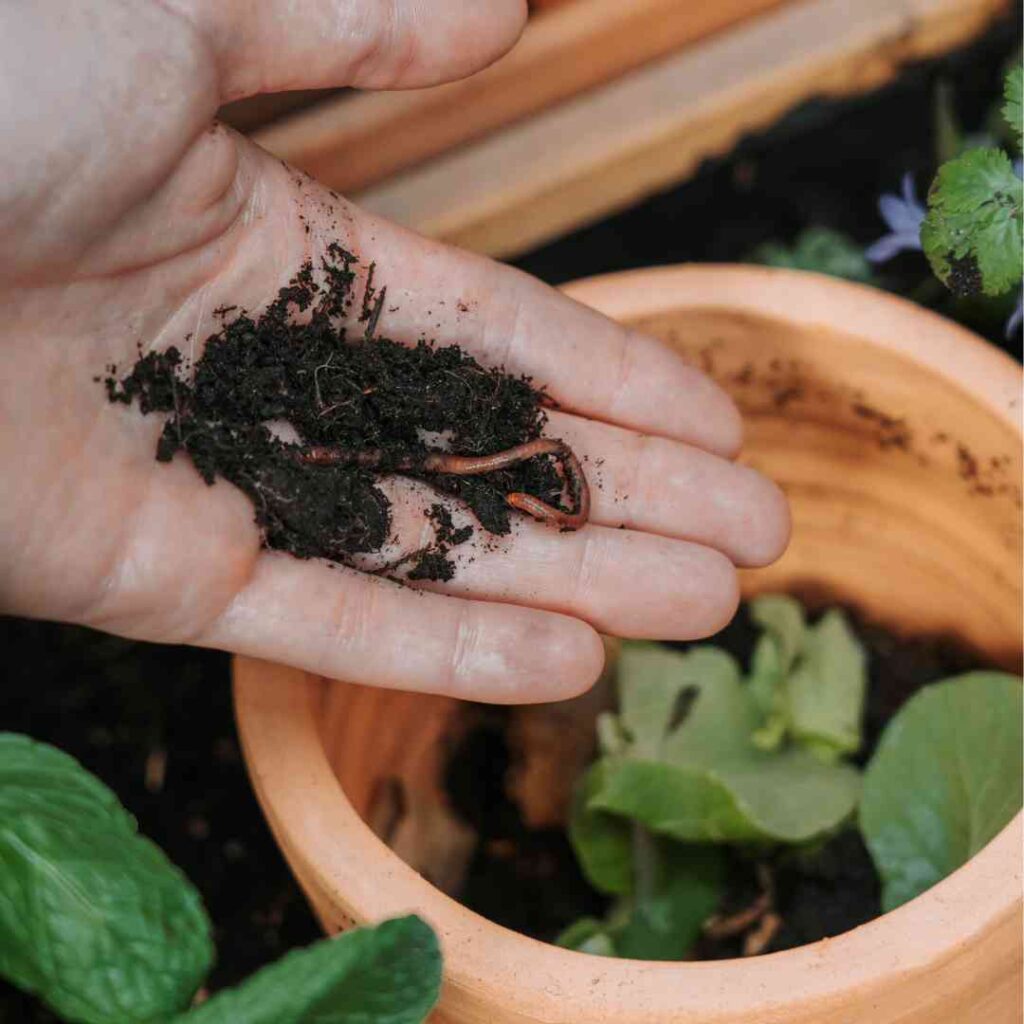
In winter, carbon-rich materials play an essential role in maintaining a healthy environment in your worm composter. Brown cardboard, kraft paper, dry leaves, and coconut fiber improve aeration in the bin, absorb excess moisture, and create a warm and comfortable bedding in which the worms can take refuge. To maintain a good balance and prevent the compost from becoming too compact or too wet, remember to add these materials regularly: in winter, the ideal rule of thumb is to add one part brown material for every part green material.
Insulating your worm composter: different solutions
To get through the winter without any worries, we recommend finding a way to protect your worms from the cold. This is especially important if your worm composter is made of plastic or wood. The advantage of terracotta, and particularly our Ceercle worm composters, Ceercle it protects the worms from temperature fluctuations.
Therefore, we recommend moving your worm composter if you have the opportunity to do so. You can bring it inside your home without any worries. If that bothers you, you can always put it in your garage, under a lean-to, or in an unheated entryway. However, we strongly advise against leaving the worm composter exposed to the north all winter long. That's why you should think about its exposure as soon as you install it!
Otherwise, protect your worm composter with a winter cover. Alternatively, you can insulate your worm composter naturally with blankets, straw, or thick cardboard. The idea is to protect the worms from the wind, which can significantly cool down their home.
However, it is essential to pay attention to air circulation when insulating your worm composter. If air cannot circulate, there is a risk of condensation and therefore suffocation for the worms. Keep this in mind to avoid finding them dead next spring.
Conclusion
Winterizing your worm composter is primarily a matter of anticipation and gentleness. By understanding how worms react to cold temperatures and simply adapting their diet, environment, and bin insulation, you can provide them with the best conditions to get through the winter unscathed. With a few simple, regular steps, your worms will stay healthy and be ready to resume their activity in full force when spring returns.
Raised by us on our vermiculture farm near Lyon.
500g bag of worms and eggs
Microfauna for starting the vermicomposter
Fast home delivery