Pot gardening is like having nature at your fingertips, without the need for shovels or boots!
Whether you're the proud owner of a balcony, a terrace or just a sunny window, growing plants in pots is simple, fun and ultra-green.
Discover our tips for successful container gardening, right at your fingertips.
👉 For year-round gardening, discover our 4-season subscription!
Contents
What type of pot should I choose?
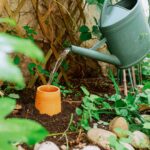
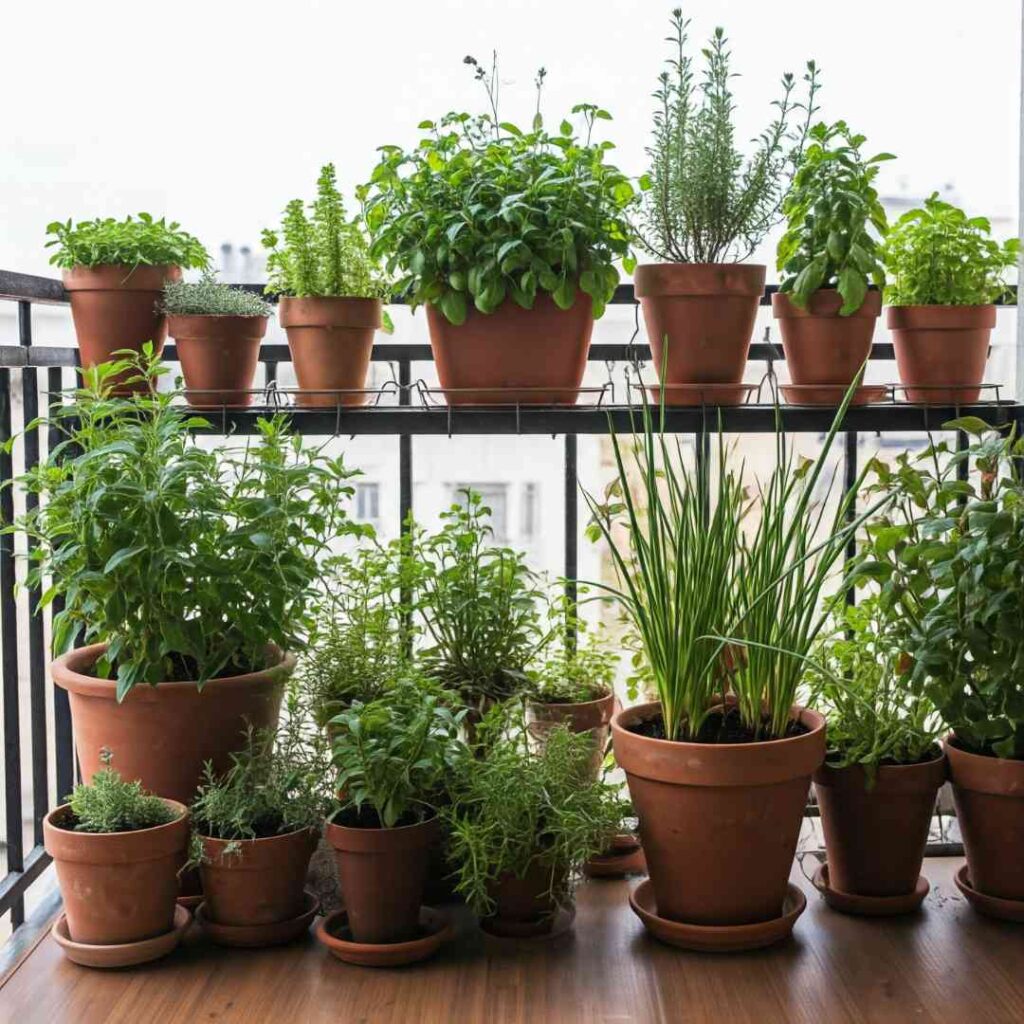
Terracotta pots: the natural, breathable option
Terracotta pots are the perfect choice for the well-being of your plants.
Its porous walls allow the roots to breathe and ensure good drainage, reducing the risk of root rot.
It also acts as a thermal insulator, protecting your plants from temperature changes.
The only drawback is that they tend to dry out more quickly, so remember to water your plants well!
Plastic pots: lightweight and economical
The recycled plastic pot has it all.
- Lightweight and easy to move, perfect for balconies and terraces.
- It retains moisture well, ideal for plants that like their soil always fresh.
- Shock and frost-resistant.
- Very economical, it's one of the most affordable pots.
- With its many shapes and sizes, it also adds a cool decorative touch.
And sometimes it hides clever little extras, like a built-in water tank.
The geotextile pot: optimal root development
Not everyone is familiar with the geotextile pot, but you might like it...
Thanks to its special coating, it promotes optimal root development by allowing air and water to circulate freely. It prevents them from curling into a circle (bye bye bunting!) and stimulates the formation of secondary roots, for a denser, more vigorous root system.
Even better: often made from recycled materials, it's a perfect alternative to traditional pots.
Hanging pots and planters: save space without sacrificing style
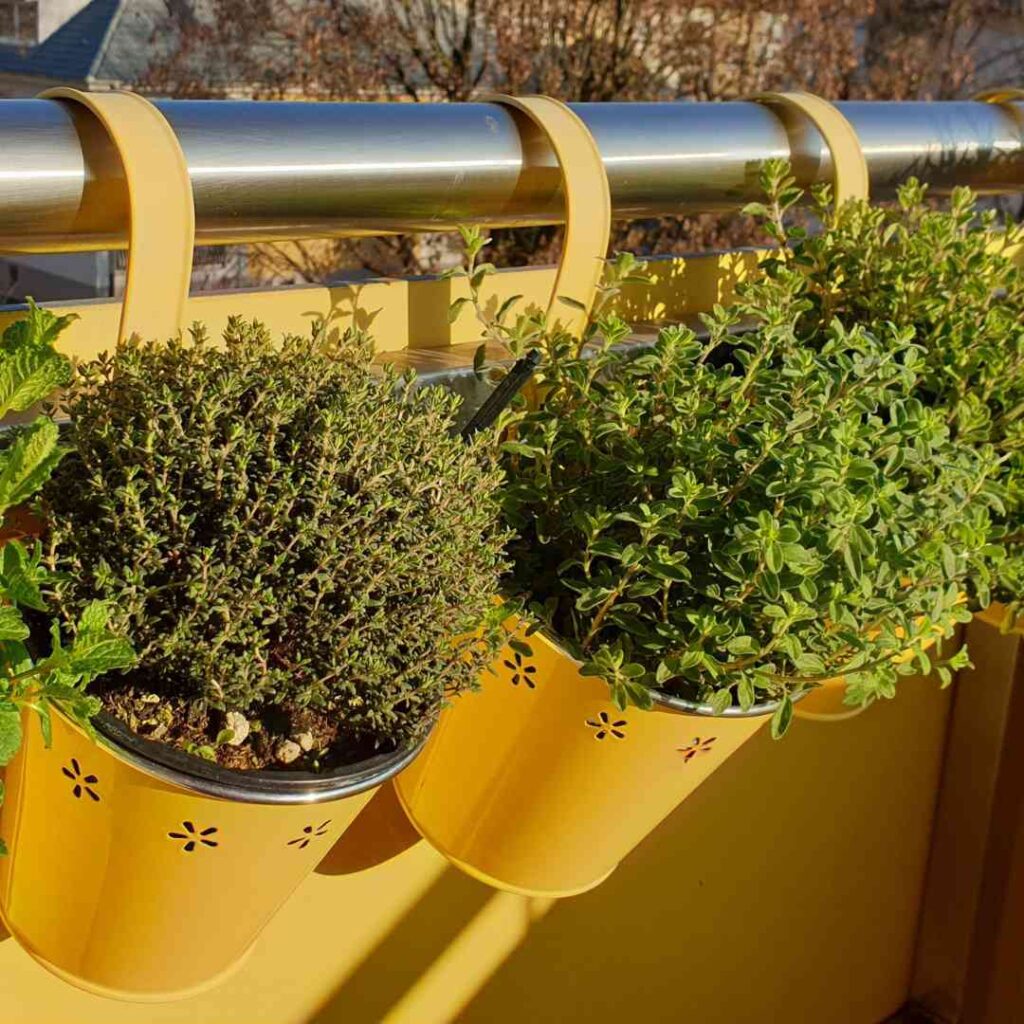
If you don't have much space, we recommend hanging pots on your balcony or in your apartment. What's more, they'll dress up the space.
Perfect for drooping plants (pothos, ivy, ferns, tradescantia, chlorophytum) or climbers, but also for herbs and small fruits such as strawberries.
You still need to ensure proper drainage and monitor watering, as plants closer to the sun dry out more quickly.
Ceercle tip Ceercle anything can be turned into a container! Old teapots, tin cans, or crates with holes in them... Give them a second life as planters. Space may be limited, but imagination knows no bounds!
The Ceercle balcony vegetable garden
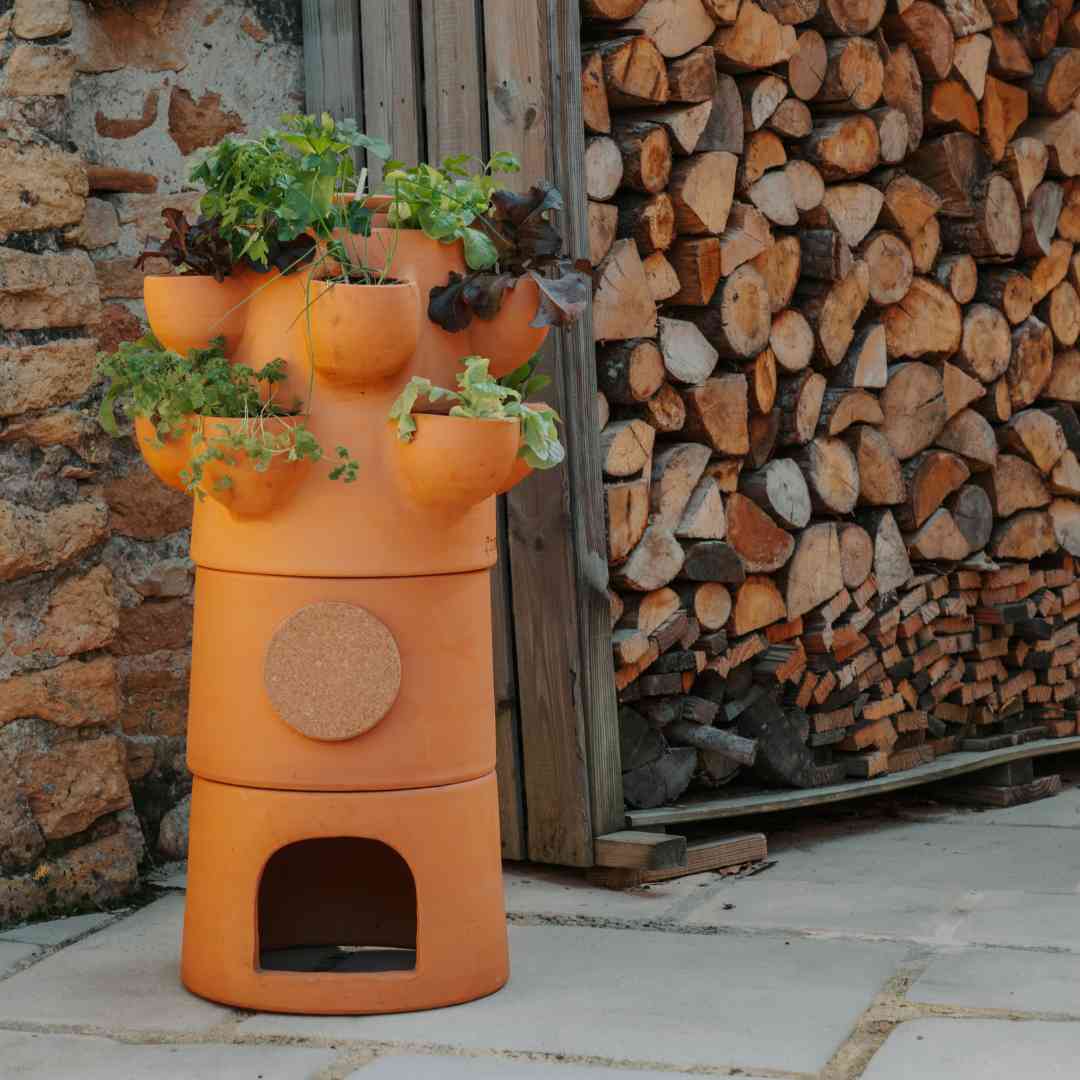
Ceercle offers Ceercle the opportunity to grow and compost in a single object with the composting vegetable garden. Compact, you only need 40 cm of floor space!
Thanks to its self-fertilizing system, gardening becomes child's play: your plants are nourished by your bio-waste! You harvest compost and compost tea to fertilize your plants.
Thanks to the action of compost worms, composting is 4 times faster and odorless.
A self-fertilizing vegetable garden for growing and composting in a small space
Easy & Odorless
Handcrafted in Portugal
Design
Compact
Modular
2x more harvests than in pots
Which substrate for pot gardening?
The choice of substrate is crucial for pot gardening, as it directly influences plant growth, water retention and root aeration.
Characteristics of a good substrate for growing in pots
- Good water retention, but not too much to avoid root rot.
- Good aeration to allow roots to breathe.
- Rich in nutrients for healthy growth.
- Effective drainage (often with sand, perlite or clay balls).
Choose universal or horticultural potting soil
Garden soil is too heavy and compact to grow your plants in pots. You risk suffocating the roots.
Universal or horticultural potting soil is suitable for most flowering plants, herbs and vegetables. It is rich in organic matter. You can add perlite, vermiculite or sand to improve drainage. You can also enrich it with mature compost or manure.
Ceercle tip Ceercle add a thin layer of clay beads to the bottom of your pot to ensure good water drainage.
Create your own blend
This mixture is suitable for most potted plants:
- 1/3 garden soil
- 1/3 universal potting soil
- 1/3 compost or vermicompost
Adapt the substrate to the needs of your plants
Soil requirements vary from plant to plant.
For example:
- Citrus fruits like rich, well-drained, slightly acidic soil. The good news is that there are ready-made mixes specially designed for them.
- Cacti and succulents need a highly draining substrate. A mix of potting soil, coarse sand and gravel avoids retaining too much moisture, which they hate.
Which plants to grow in pots?
Easy and productive vegetables
For your urban vegetable garden, choose varieties suitable for growing in pots, such as compact or dwarf varieties. They take up less space, but are just as productive! For example, there are dwarf varieties of tomatoes, beans, peppers, zucchinis and so on.
Radishes and lettuces grow very well in pots. They don't take up much space, are easy to care for and produce good harvests, even on a balcony.
You can even grow potatoes in pots!
Aromatic must-haves
Aromatic herbs are a must-have on your balcony for flavouring your dishes in the kitchen! Basil, chives, thyme, rosemary, dill, parsley... they're all great in pots! Mint too, but it's best to keep a pot just for it, as it tends to take up a lot of space.
Useful and edible flowers
There's nothing like flowers to add color to your balcony! But that's not all: they can be eaten, attract pollinators and ward off pests.
Some flowers are as beautiful as they are tasty. Nasturtium, marigold, cosmos, marigold, pansy... are all edible flowers! Add them to your salads, savor them on your desserts, or enjoy their flavor in infusions.
By planting flowers, you attract pollinating insects such as bees, bumblebees and butterflies. These insects pollinate vegetables and fruit such as tomatoes and zucchinis. The result: better yields from your balcony vegetable garden.
Growing flowerskeeps pests at bay. On the one hand, they attract beneficial insects such as ladybugs, hoverflies and lacewings. They help to naturally regulate harmful insects and pests. On the other hand, some flowers act as repellent plants. Carnations keep aphids away, marigolds repel whiteflies and perlagoniums keep mosquitoes away.
How to optimize space in pot gardening?
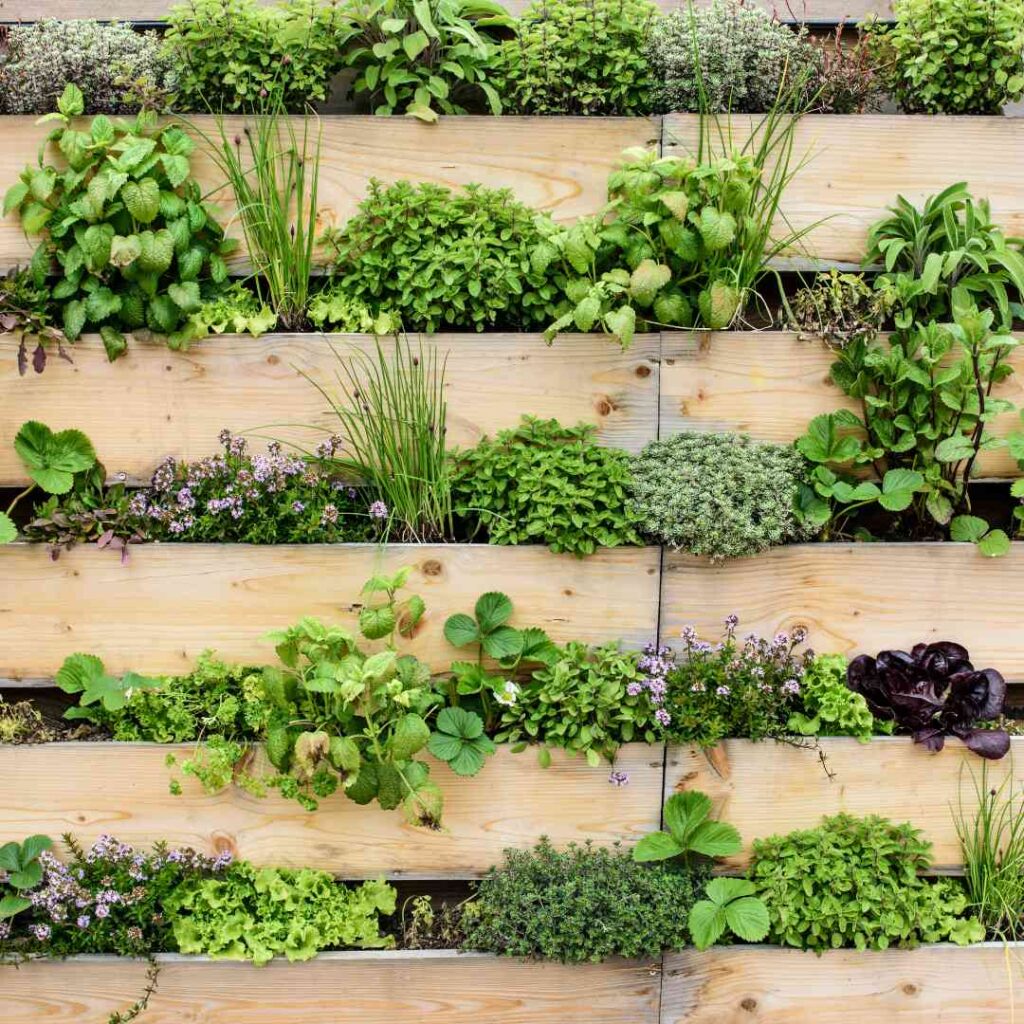
A vertical garden
When it comes to container gardening, every centimetre counts! To grow more without pushing the walls, opt for height : shelves, trellises, hanging pots or planters with compartments.
Some vertical gardens, such as our Ceercle composting garden, even include a composter to directly nourish your crops. Clever, isn't it?
Combining crops
Create clever space-saving duos!
- Combine fast-growing plants such as radishes and lettuces with slower-growing ones such as carrots and herbs.
- Overlap crops: combine crops at different growth stages.
- Stagger crops by combining plants of different sizes: large tomato or bean plants with small lettuces or radishes at the base.
Pot yield: what to expect?
Even in pots, you can achieve a productive garden. Yields are generally lower in pots than in the ground, because root space and substrate volume are limited.
To maximize your harvests, a few reflexes are essential: water well, feed the soil regularly, and position pots according to the plant's need for light.
Conclusion
Whatever the size of your space, container gardening has the potential to transform your balcony or terrace into a lush jungle or abundant vegetable garden. Accessible and ecological, it allows you to reconnect with nature, even in the city.
So why not start growing a balcony garden today, to harvest fresh tomatoes and herbs, with Ceercle composters Ceercle