Do you want to compost, but don't know where to find a compost bin?
Thanks to our tips, you'll be able to compost your biowaste at home or close to home! By making composting part of your daily routine, you'll reduce your waste production (and therefore your carbon footprint), while benefiting from good compost for your plants. Ain't life grand?
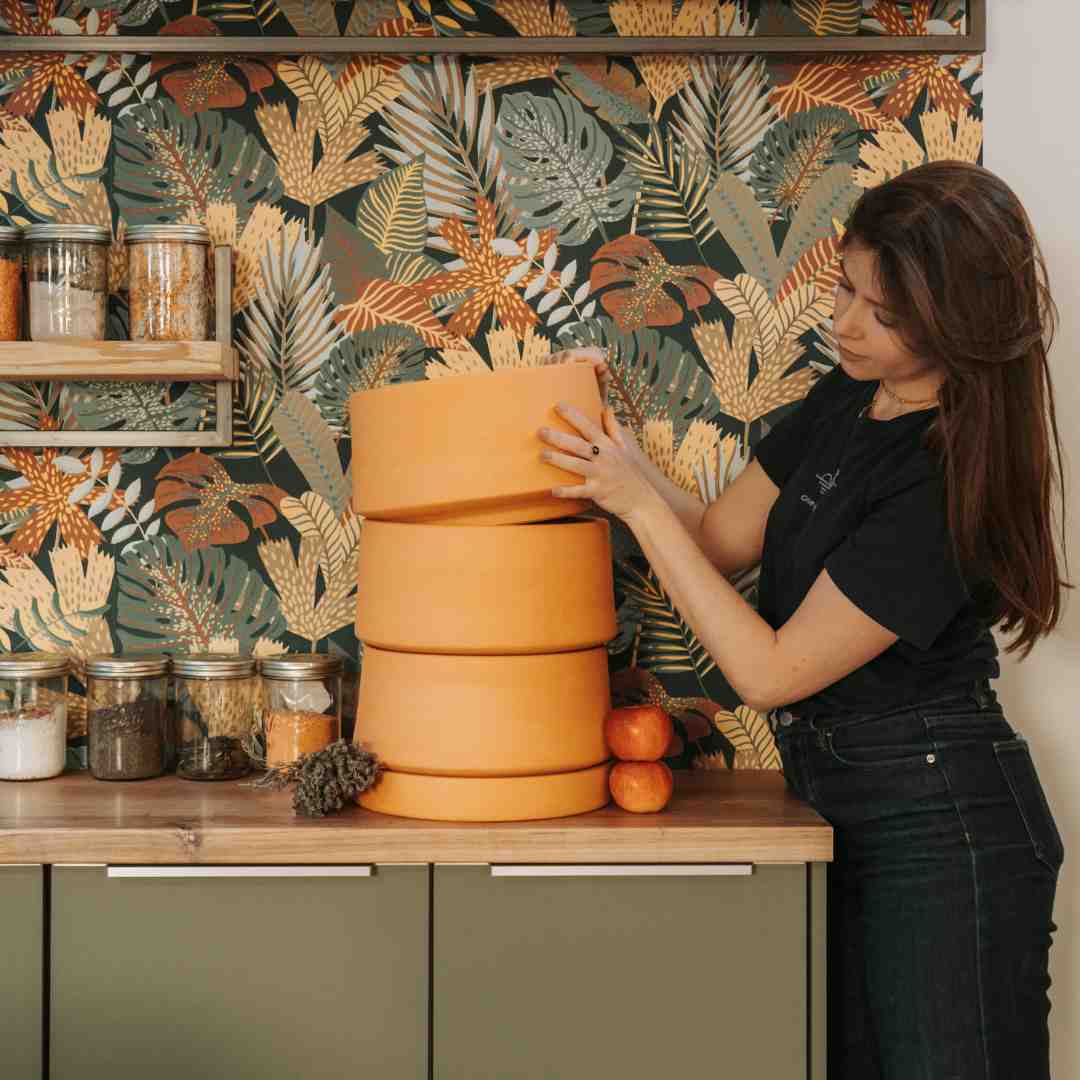
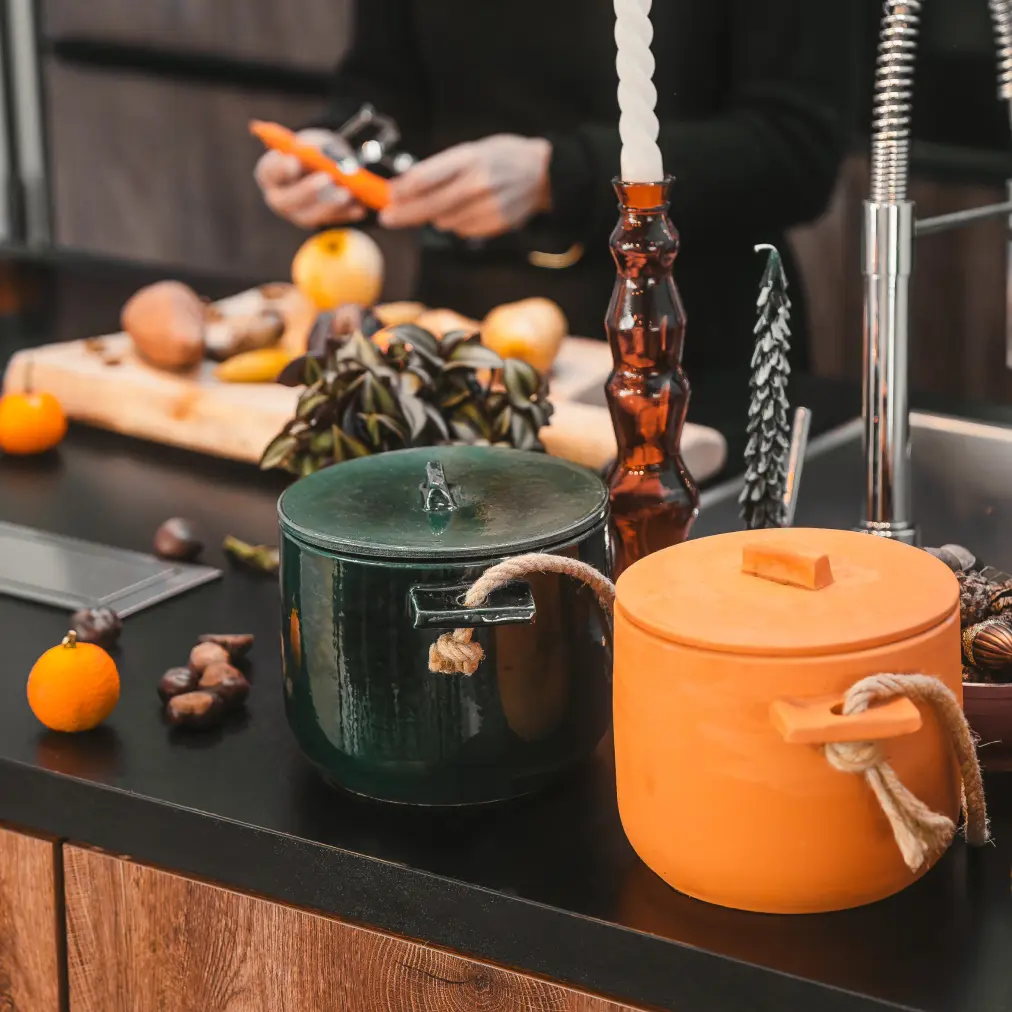
👉 Discover our full range of composters, so you can compost at home, even in an apartment.
Contents
Which composter do you need?
Before deciding where to buy a compost bin, the first step is to find out what type of composter is right for you. To make composting an everyday activity, your composter needs to be adapted to your needs and desires. The idea is not just to have a compost bin, but for it to become an integral part of your daily routine, to be used pleasantly and without constraint.
Before choosing a composter, what should you think about?
- The composition of your household: this determines the amount of waste you produce, and therefore the right volume for your composter.
- Where you live: if you live in a house with a garden, you'll probably have room to install a large garden composter. If you live in a small apartment in the city, you can opt for an outdoor composter, a vermicomposter or a conventional composter.
- The speed with which waste is broken down : thanks to the action of the worms, waste is broken down around 4 times faster in a vermicomposter than in a conventional composter.
- Your design sensibility
- Your budget: composter prices can vary from 50 to 300 euros, depending on size, material, etc.
Based on these criteria, you'll be able to choose the composter that suits your needs and your budget! You'll find our comparative guide in our article "Composter prices: our comparative guide".
Cultivate and compost in the city (indoors or outdoors)
Easy & Odorless
Handcrafted products
Design
Compact
Modular
Eligible for subsidies
Help to buy a compost bin
Buying a composter requires a certain budget. The good news is that many local authorities offer subsidies to make the purchase of a composter easier. This can take the form of free distribution of compost bins, or financial assistance to cover all or part of the cost of the composter.
Use the map below to find out about the financial aid available near you!
Interactive map credits: Thanks to Plus 2 Vers
How can you compost close to home if you don't have a composter?
How can you compost if you don't have your own composter? There are other ways of composting your waste , such as using community composters or taking part in separate biowaste collection schemes.
Collective composting
Collective composting involves composting your organic waste in a shared compost bin. Set up by local authorities, communal composters introduce residents to sorting and recycling their biowaste. These communal composting sites are often located at the foot of buildings, in parks or in shared gardens. Collective compost bins make it possible to :
- Compost away from home
- Reduce your household waste
- Recover mature compost for free
- Create social links with local residents
How do I find a composting site near me?
You can, of course, get information from your local town hall, associations, neighbors... In addition, there are collaborative online maps to help you locate a collective composter near you. For example, the Réseau Compost Citoyen has developed Géocomposta national map of local composting sites.

Separate collection of bio-waste
If your local authority implements separate collection of biowaste, this can be an interesting solution. It consists of an additional collection dedicated to biowaste. As we already do for our packaging and green waste, all you have to do is separate your biowaste from the rest of your rubbish.
Biowaste is collected door-to-door by local authorities, or by voluntary drop-off at selected points.
- Door-to-door, local authorities come to collect your bioseau or bin filled with biowaste on a fixed day.
- At the point d'apport volontaire, it's up to you to go to the point to deposit your biowaste in the shared garbage can.
Next, biowaste sorted at source is sent to composting or methanization facilities. It is transformed into compost or biogas.
We hope we have helped you find solutions for composting at home and in your neighborhood. And don't hesitate to check out our range of composters Ceercle ! 😉