Whether at home or in the garden, it's always fun, easy and useful to multiply your plants. Stems cut from a parent plant can both rejuvenate the plant and produce vigorous new shoots. There are a number of techniques for reproducing plants by hand, which can be used by the whole family, for example. For the homeowner, the interest is mainly experimental and educational. Here's our advice on how to reproduce your plants.
Contents
How do different plant species reproduce?
Some plant species reproduce in different ways. There are two types of natural reproduction: sexual and asexual. Flowering plants belong to the first family, and rely on the action of insects and wind to multiply. Plants without flowers have no reproductive organs. In this case, cell division comes into play.
Sexual genetic reproduction
Sexual reproduction involves male and female plants. The genetic material of the parents meets for fertilization, producing a new plant.
Fertilization through pollination
Flowering plants reproduce by pollination. Each individual is either male, with sexual organs called stamens, or female, with organs called pistils. The male flower contains pollen, which pollinating insects carry to the pistil of the female flower. Pollination can also take place through the action of the wind, or when the fruits of a plant are digested and then ejected by the digestive system of animals. In the droppings, the seeds may still be intact and thus reach the ground to take root. This phenomenon is called cross-pollination. Then comes the fertilization stage. Pollen comes into contact with the flower's pistil and fertilizes the ovule.
Fertilization by autogamy
Autogamy or self-fertilization is a mode of sexual reproduction observed in certain plant varieties. These are hermaphroditic, meaning they produce male or female gametes as required. The plants concerned thus preserve a certain purity of lineage with identical genetic characteristics. Autogamy is observed in wheat, barley and beans, for example.
Asexual reproduction by fragmentation
Asexual reproduction requires only the DNA of a single individual. This produces offspring with identical genetic characteristics, but which are more sensitive to climatic hazards and disease. A part of the mother plant (leaves or stems) falls to the ground and is enough to create a new plant. This technique is widely used to quickly decorate gardens: it is in fact propagation by cuttings.
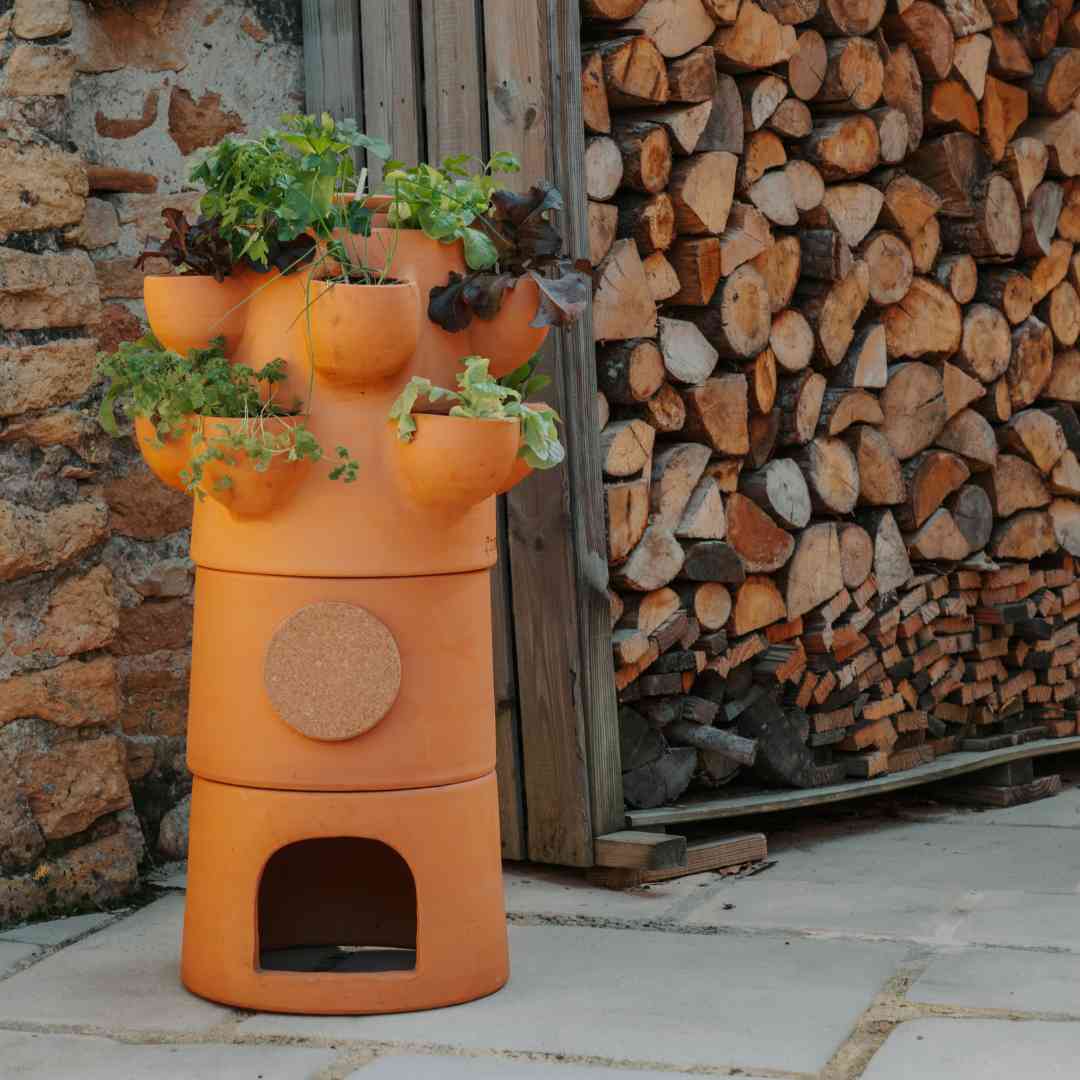
A self-fertilizing vegetable garden for growing and composting in a small space
Easy & Odorless
Handcrafted in Portugal
Design
Compact
Modular
2x more harvests than in pots
What are the different ways of creating a new plant manually?
Plant propagation can be done largely by hand. The gardener has a choice: cuttings, layering, grafting, sowing or dividing. There's no need to invest in a panoply of innovative tools; following good advice is more than enough.
The different types of cuttings
Cutting consists in multiplying a plant by taking a small piece of stem which the gardener then replants to obtain new roots. This is a traditional technique , but it can take several forms: cuttings in water, in soil or in a crossette.
Traditional stem cuttings
The principle of cuttings is simple: take a piece of stem to create a new plant. The mother plant can be cut off in spring. This propagation technique is particularly popular with private individuals, as it's simple, economical and produces a mature plant quickly. The idea is to select a leafless, flowerless branch 10 to 15 centimetres long and cut it just below the node of the plant's base. Simply plant this stem in suitable potting soil, moisten and wait for the roots to develop.
The water-cutting method, on the other hand, is mainly reserved for indoor planting. Instead of transferring the stem directly into the soil, place it in a vase of water. It's fun to "watch" with the children for the appearance of roots. After a while, the cutting can be repotted.
Layering: propagation from the mother plant
Layering allows us to create genuine small clones of the original plant by rooting branches located on the aerial part of the plant. The technique is inspired by a natural multiplication phenomenon known as "stoloning". Strawberry plants use it to grow above ground. The plant produces stems which, when they touch the ground, develop their own roots to create a new individual. At home, bend a branch and bury it without detaching it from the mother plant. When it's strong enough, you'll need to detach it.
Dividing perennial stumps
This method of propagation concerns only a few plant species: bushy perennials, bushy plants, stump plants, bulbous plants and tuberous plants. Division also strengthens the original plant. In spring, start by digging up the plant's stem, stump or root ball. Cut the root ball with pruning shears, taking care to preserve the leaves and roots of each batch. Then replant in the ground.
Contact grafting of cells
Grafting is mainly used for fruit trees, and requires special equipment. The technique consists in implanting a graft onto another plant called rootstock, combining their respective cell tissues to enable fusion. Grafting is best carried out in summer, when the trees' sap rises. There are several grafting methods, but one of the simplest is as follows: slit grafting. The rootstock is cut and split down the middle. The base of the graft is cut at the base in a bevelled shape. The graft is inserted into the slit in the rootstock, and the wounds are covered with putty and tightened with ties.
With our 4 seasons subscription receive boxes of organic and seasonal plants
4 boxes of 6 or 16 plants per year
Careful delivery
After-sales service
4 gardening masterclasses
Aromatics, vegetables, flowers
No obligation
When and how do plants reproduce?
There's no right time to propagate plants. It all depends on the variety of plant and the type of propagation the gardener wishes to use. Nevertheless, it is advisable to create new shoots in spring. Always perform this operation on a vigorous, disease-free and well-developed plant. Remember to feed your plants with organic green manure with nutrients (nitrogen, zinc, potassium or iron) essential to their development.
Hobby gardeners can do their own planting division. Various techniques are available, none of which require any particular skill. It's a fun, educational and economical activity for the whole family. Now you know how to propagate your favorite plants, but will you be able to cope with the many plant diseases?