To help you keep your compost balanced, here are the 5 most common compost problems and their solutions!
Installing a compost bin at the bottom of the garden or an apartment composter has many advantages. Transforming organic food waste into high-quality fertilizer helps meet the needs of plants and soil.
What's more, it's a natural, ecological and economical process for households. Keeping compost healthy is not rocket science. However, there are a few best practices you should be aware of to avoid mistakes.
Contents
Top 5 of the most common problems with conventional composting
In the case of a conventional composter, certain problems are relatively common. Unpleasant odors, compost that's too dry or waterlogged, the presence of pests or poor decomposition of waste are just some of the problems you may encounter.
Here we take a look at the 5 most common composting problems, and present you with some easy-to-implement solutions.
#1 Bad smells in the compost bin
Needless to say, unpleasant odors from compost are neither pleasant nor normal.
If you smell sulfur, it's quite possible that the substrate isn't getting enough air, causing the organic waste to rot.
- Limit the amount of organic waste to give the compost time to decompose.
- To improve aeration, turn the soil over regularly.
- Too much water is detrimental to compost. If it rains often, it may be necessary to temporarily cover the pile.
- The more you break down your waste into smaller pieces, the better it will decompose.
- Be careful to balance the addition of materials rich in nitrogen (fresh cut grass, for example) and carbon.
Good to know: Worm composters do not emit unpleasant odors thanks to the action of worms, which accelerate the decomposition of organic waste. Ceercle worm composters Ceercle fast, odor-free composting!
Odorless composting indoors or outdoors
From €39.00
Easy & Odorless
Handcrafted products
Compact
Modular
Eligible for subsidies
#2 Organic waste that doesn't decompose
You show good will and yet your compost doesn't decompose.
Ask yourself the right questions: have you, for example, integrated only compostable waste? When starting out, it's easy to make mistakes. Watch out for leftover meat and fish, sauces and fats, citrus peels, nuts and dairy products, which don't break down.
Other materials simply go through a longer cycle. This is the case with eggshells or banana peels, which should be ground into small pieces to facilitate degradation. To speed up the process, don't forget to respect the balance between nitrogen and carbon. Don't forget to turn the pile over from time to time to aerate it and replace the surface layers.
For a good job, don't hesitate to invest in a compost thermometer to check temperature variations.
#3 Compost that's too dry
Depending on where you set up your compost bin, it may suffer from drought. Facing due south, the main risk is that decomposition will come to a screeching halt. So it's best to choose a shady spot, such as under a tree.
To find out if your compost is really too dry, take a handful in your hand and squeeze it. If the soil is crumbly, it's a sign that it's too dry. Don't hesitate to moisten the pile with a little rainwater from your compost collector. Alternatively, add green organic waste such as vegetable peelings or decomposable food scraps.
In general, the rule is 2/3 carbonaceous matter to 1/3 nitrogenous matter.
#4 Too much moisture
Conversely, if water beads up between your fingers when you squeeze a clump of compost in your hand, then your mixture may be too moist. Too much green organic waste and not enough brown matter such as wood shavings or pieces of cardboard can make the compost muddy. You'll need to balance it out by stopping watering, adding dry waste and aerating the pile from time to time by turning it over.
#5 The presence of insect pests
There's no need to be alarmed by the fact that a few visitors have taken up residence in your compost. On the contrary, some insects are very useful and help you obtain rich, ripe, fertile soil more quickly.
These include earthworms. The galleries they dig have the advantage of circulating air through the compost and ensuring optimal aeration. However, pests can also take up residence in the pile.
Ants are not welcome in vermicomposters, as they devour the earthworms needed for decomposition. The compost is probably too acidic and dry. Spray with a little water and add a few crushed eggshells to restore the PH.
Slugs and snails love fresh, moist green waste. The only solution is to patiently remove them by hand before they ruin your efforts. Soil flies like moist soil enriched with organic matter. They can lay their eggs in the substrate which, when added to potting soil, can make your potted plants very sick. Compost is probably too moist, so add dry matter to balance it out.
Best practices in vermicomposting
What about vermicomposting? The vermicomposting technique is somewhat different from conventional composting. The action of the earthworms speeds up the decomposition of materials without releasing any unpleasant odours. Here are the answers to the questions you're probably asking about how a vermicomposter and the best practices to follow.
What is vermicomposting?
The practice of vermicomposting, born in the 1950s, is winning over more and more city dwellers and amateur gardeners.
This is the natural process of decomposing organic waste through the digestion of worms called earthworms. These worms transform the initial matter into a humus- and nutrient-rich fertilizer, essential for plant growth and soil health.
A vermicomposter can be installed indoors, on a balcony or in the shade at the bottom of the garden. This model is odorless, as the worms dig small holes to circulate the air. This method of composting is cold, which means that the earthworms do not suffer from temperature variations and therefore from disease.
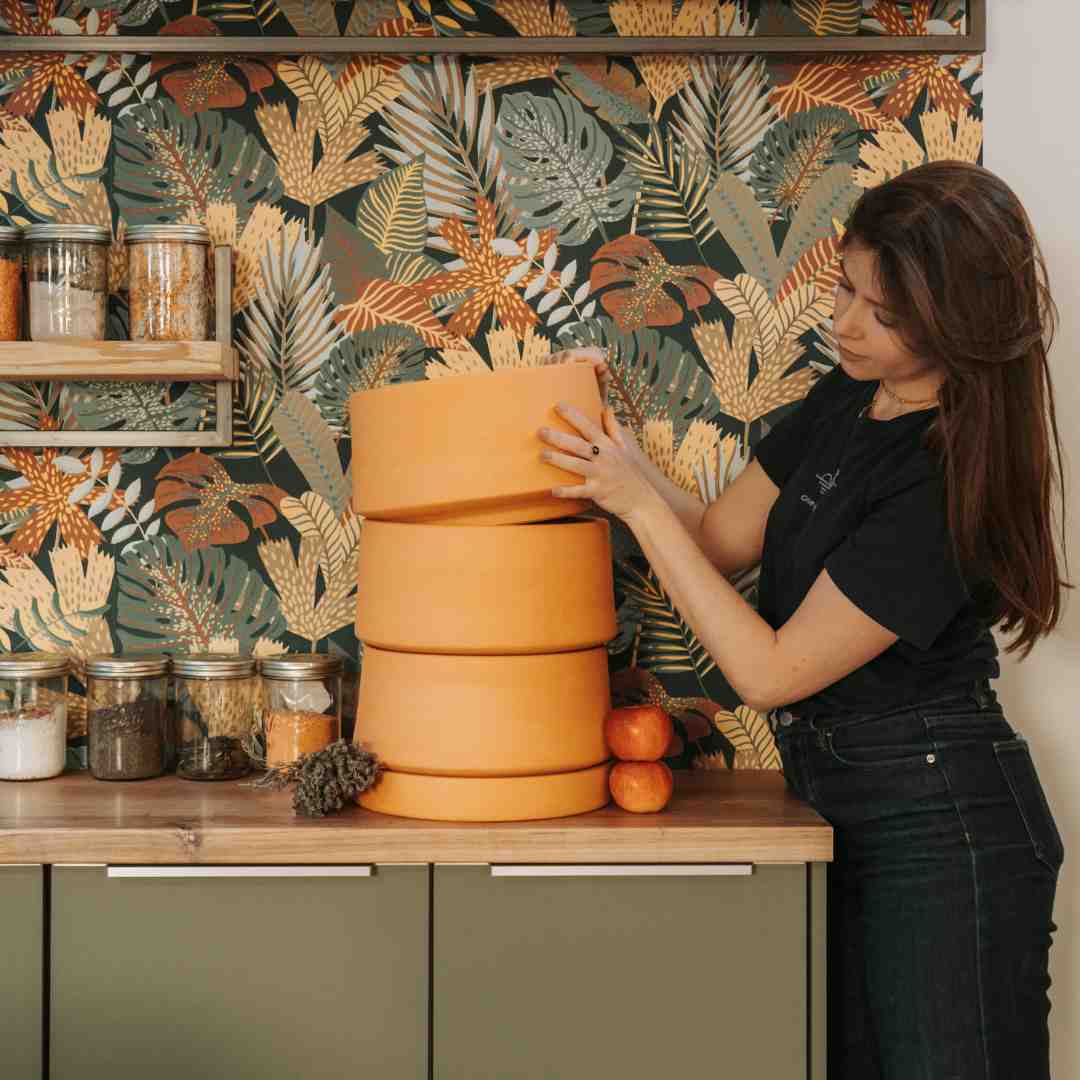
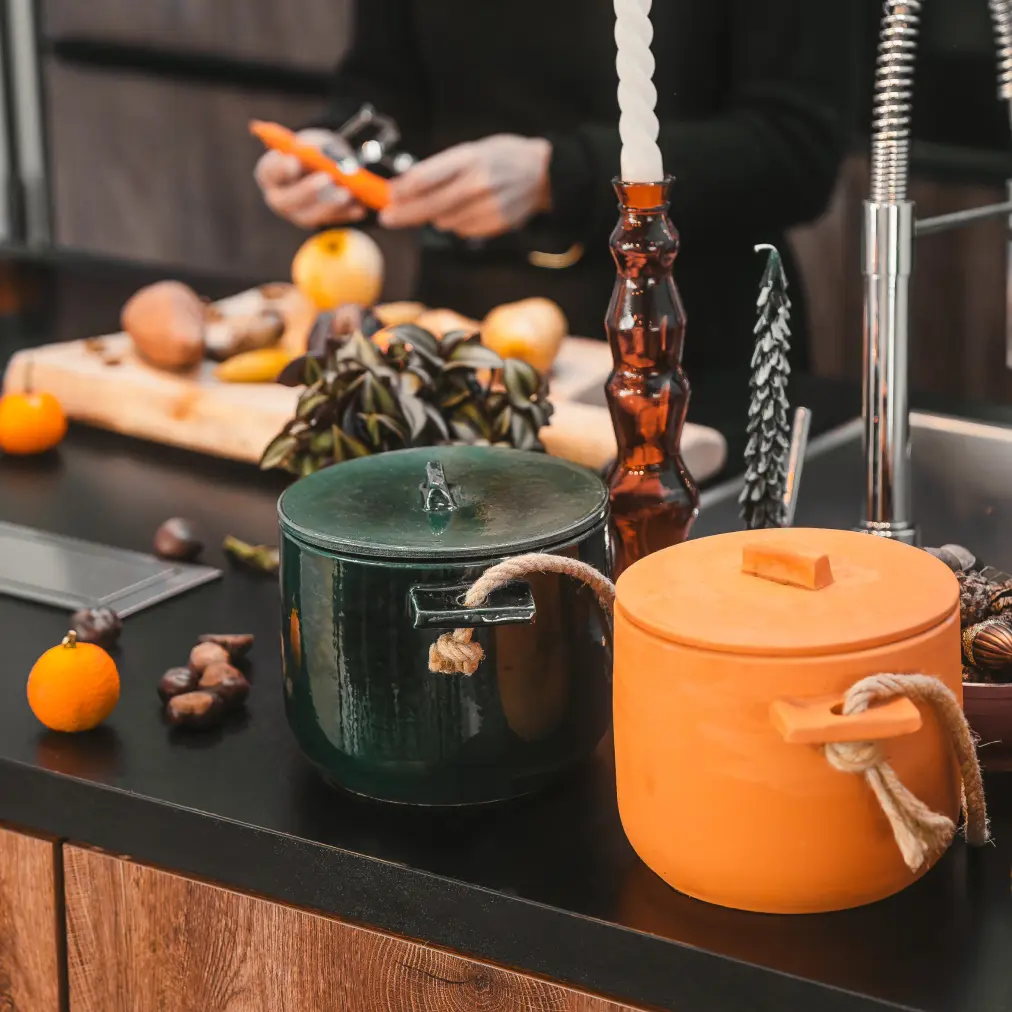
Why not invest in a compost bin Ceercle ? It is handmade from terracotta and allows city dwellers to grow fruit, vegetables, and herbs while recycling their organic waste.
A self-fertilizing vegetable garden for growing and composting in a small space
Easy & Odorless
Handcrafted in Portugal
Design
Compact
Modular
2x more harvests than in pots
Composting organic waste
For a balanced compost, make sure you compost 2/3 fresh matter, i.e. "green" waste providing nitrogen, for 1/3 dry or brown matter rich in carbon. Vegetable peelings, bread, coffee grounds, biodegradable tea bags, wilted flowers and dead leaves all decompose.
On the other hand, citrus fruits, thick or processed vegetable skins, dairy products, meat and fish, oils, fried foods and grass clippings should not be added to the soil. In general, food scraps should always be chopped to facilitate their degradation. To find out more, read our article "What food to put in your vermicomposter".
Place your vermicomposter in the shade, as worms hate temperature variations. In winter, you may find it useful to put up a winter cover to protect against frost. Keep the humidity level at around 80%. The amount of green waste normally keeps the compost slightly moist. Earthworms don't like acidity. Adding crushed eggshells from time to time can rebalance the PH.
Conclusion
In conclusion, it's possible to give a second life to your organic waste while growing good vegetables! However, composting requires a minimum of maintenance. By adopting good practices, you can avoid the most common composting problems.
Didn't this article answer all your questions? Take advantage of the SAV du potager on our Instagram account ! Send us a message, our gardening experts will give you tailored advice 🙂