Today, there are many solutions for composting at home, even in apartments. Not sure which one to choose? We're here to help you find the composter that's right for you!
If you live in an apartment, the bokashi and the vermicomposter are two composting methods suited to small spaces. If you don't have an outside space, they're equally suitable for indoors. Unlike garden composters, which require more space and maintenance, these two solutions are easy to use, with minimal constraints and no nuisance.
Discover their advantages and disadvantages.
Contents
Bokashi: a fast, practical alternative for small spaces
What is Bokashi?
The Bokashi is a kitchen composter based on an anaerobic (oxygen-free) fermentation process. The term Bokashi comes from Japanese and means "fermented organic matter". This composting system uses an activator composed of micro-organisms to ferment food waste. It consists of a bucket, a press lid and a tap at the base. It allows you to harvest compost tea and produce "pre-compost" in just two weeks.
What are the advantages of bokashi?
1. It's compact and suitable for small spaces: a small composter, it slips easily into a kitchen or balcony. Perfect for apartment living! Despite its small size, it offers sufficient volume thanks to the pressing of waste.
2. It's trouble-free: thanks to its hermetic operation, it doesn't attract pests or give off unpleasant odours.
3. No need to sort waste: unlike other solutions, the Bokashi can be used to compost all types of kitchen waste, including meat, dairy and citrus products.
4. It's fast: in just 2 weeks, you have a pre-compost that can then be mixed with soil or added to a conventional composter for complete decomposition.
5. Low-maintenance: bokashi requires no stirring or aeration, making it easy to use, even for beginners.
What are the disadvantages of bokashi?
1. Lack of mature compost: bokashi doesn't produce compost that can be used directly, only pre-compost. You'll need to bury the pre-compost or add it to an outdoor composter to complete the decomposition process.
2. The use of a compost activator: to work, the bokashi needs a specific micro-organism-based activator, which entails an additional cost.

The worm compost bin: a natural and ultra-efficient solution
What is vermicomposting?
Vermicomposting is a composting method based on the action of compost worms. These worms eat organic waste and produce a rich compost called vermicompost. Compact and odorless, the vermicomposter is ideal for use in apartments, indoors or out.
What are the advantages of a vermicomposter?
1. The vermicomposter is compact and modular: there are very compact models that fit easily into an apartment, balcony or kitchen.
2. Fast, efficient composting: worms eat the equivalent of their own weight per day. Worms break down waste 4 times faster than a conventional composter. Once started, you get ready-to-use vermicompost every 3 months.
3. Nuisance-free composting: thanks to the enzymes present in the compost worms' intestines, the vermicomposter doesn't give off unpleasant odours. It's airtight and won't attract midges.
4. Quality compost: vermicompost is an extremely rich soil improver, full of nutrients. What's more, it produces a natural liquid fertilizer called lombrithé, which is highly beneficial to your plants.
5. The vermicomposter is low-maintenance: no need to moisten it or turn it, the worms do all the work for you!
What are the disadvantages of the vermicomposter?
1. Respecting the worms' diet: you can't add just any food waste to vermicompost. Certain foods are forbidden, either because they are harmful to the worms, or because they are likely to generate unpleasant odors and/or attract insect pests. For more details, read our article "What food to put in your vermicomposter".
2. Une sensibilité aux températures extrêmes : les vers nécessitent une température stable. Trop de chaleur (>30°C) ou de froid (<0°C) risque de les tuer, ce qui rend leur utilisation un peu plus délicate en extérieur.
3. Minimal but regular maintenance: even if the vermicomposter doesn't require a great deal of effort, it's important to check the condition of the compost from time to time, and to maintain the balance between wet and dry matter to avoid any problems.

What are the differences between a bokashi, a worm composter and a conventional composter?
Each composting method has its advantages and disadvantages. Choosing a composter depends on your constraints (such as the space and time at your disposal), your needs (such as the volume of waste to be composted), and your desires. Small or large, easy to use, aesthetically pleasing, odorless... the criteria for choice can vary from one person to another.
For a clearer picture, here's a comparison chart:
| Models composter | Bokashi | Vermicomposter | Classic composter |
| Space required | Very compact (ideal for indoor use) | Compact (ideal for indoors or on the balcony) | Requires a garden |
| Accepted waste | All types of biowaste (meat, dairy products, etc.) | Animal-derived or deworming foods are prohibited. | All types of biowaste, except meat and fish scraps. |
| Composting time | 2 weeks (pre-compost) | 3 to 6 months (mature compost) | 6 to 12 months (mature compost) |
| Maintenance | Low maintenance | Autonomous thanks to worms | Must be turned and aerated |
| Odors | No odour | No odour | May release odours |
Conclusion: which composter to choose between the bokashi and the vermicomposter?
The bokashi and the vermicomposter have a lot in common. Compact, they are ideal for small spaces. They're odorless, so you can compost indoors. They're easy to use and require little maintenance. They produce compost tea, a natural liquid fertilizer for your plants.
However, there are two main differences between these two composting methods . While the bokashi can be used to compost all types of waste, this is not the case with the vermicomposter, in which certain types of waste are prohibited. Unlike the vermicomposter, the bokashi doesn't produce ready-to-use compost, only pre-compost.
Discover our Ceercle apartment worm composters
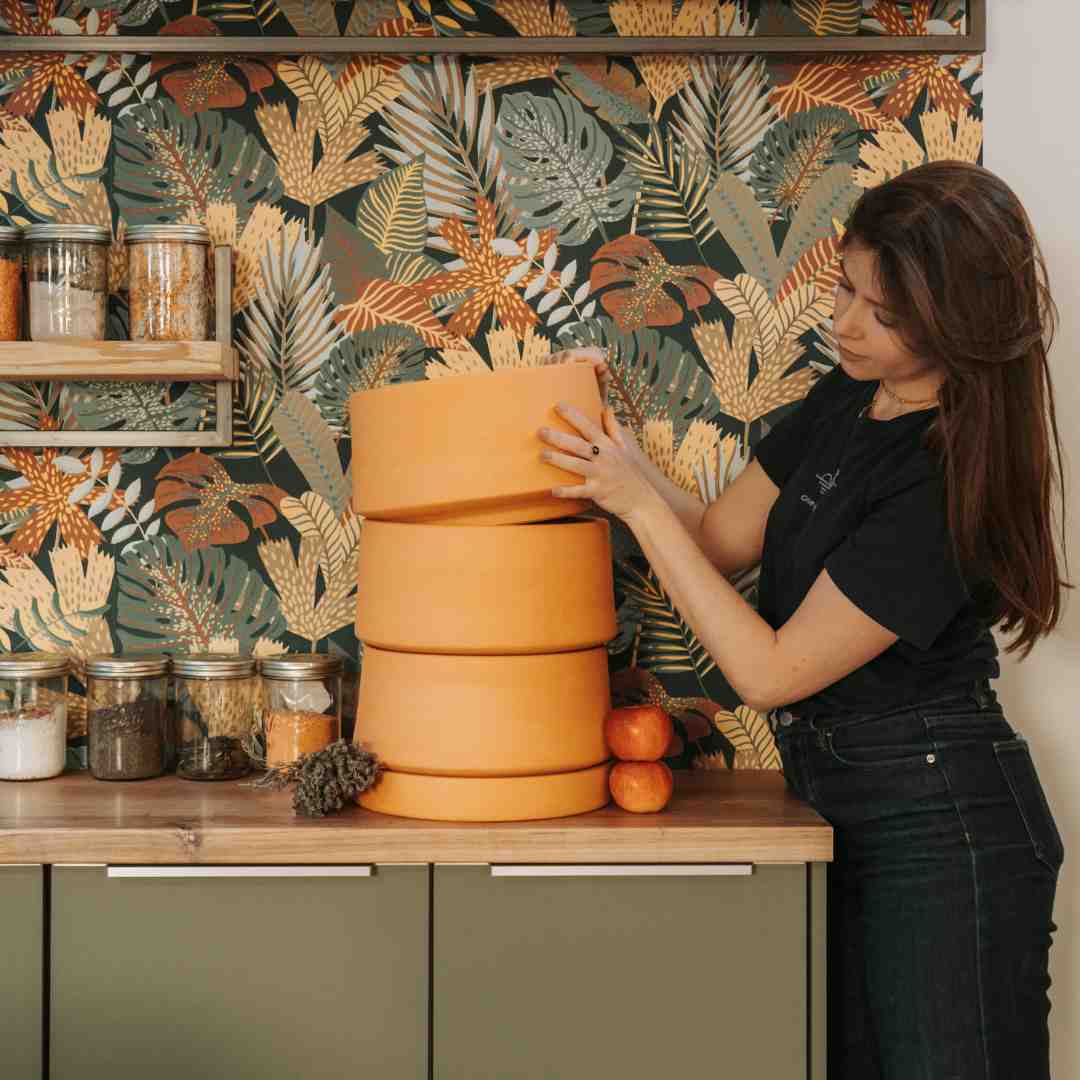
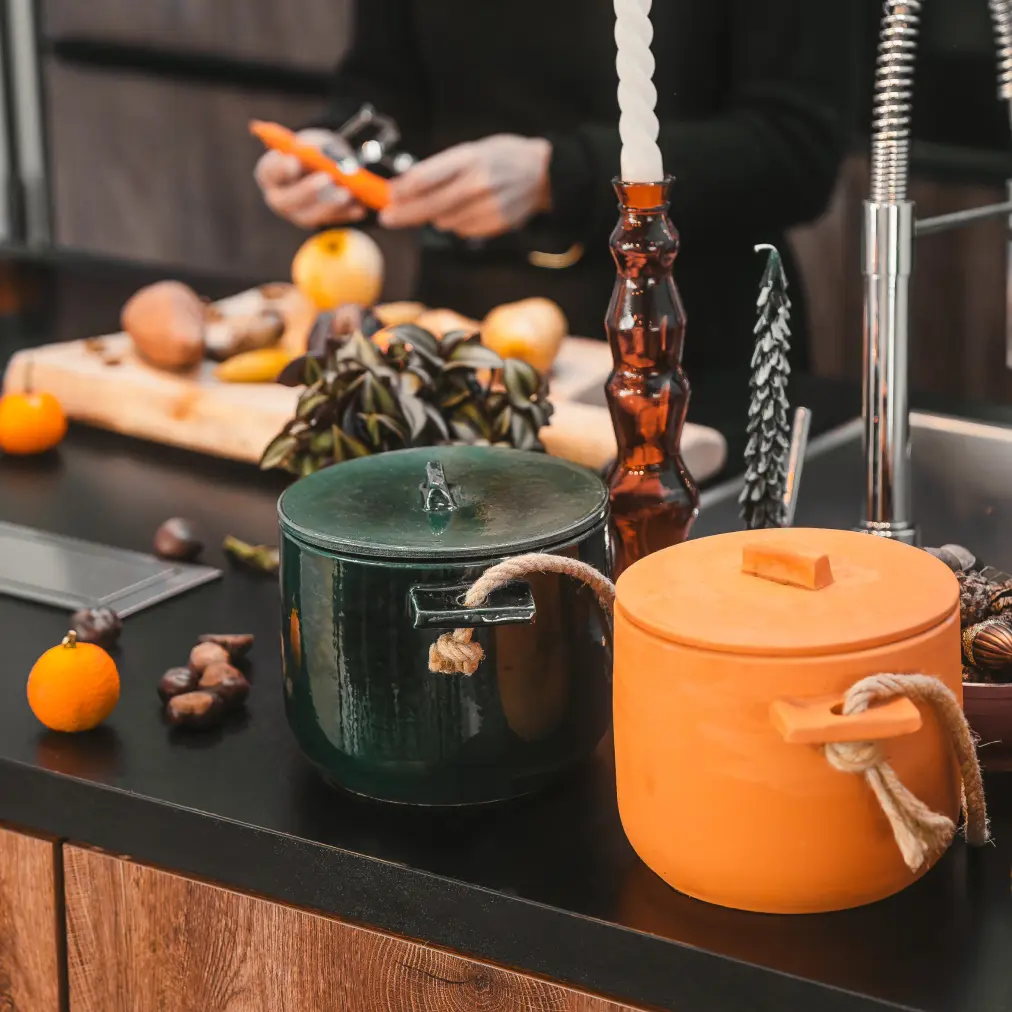
Handmade in Portugal, our apartment worm composters are designed to be both aesthetically pleasing and practical. 100% modular, they are compact, stylish and odorless.
Dreaming of a balcony vegetable garden? Discover our vermicomposter vegetable garden, for growing and composting in a single object. Self-fertilizing, your herb and vegetable plants grow twice as fast!
Discover our entire range of worm composters on our dedicated page Ceercle. Over 3,500 satisfied customers!